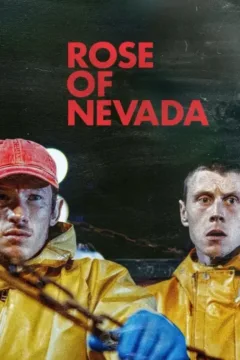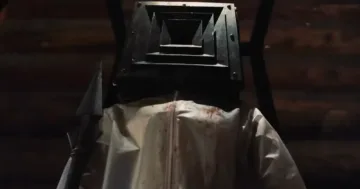
A lot of praise has been thrown Mark Jenkin’s way for Rose of Nevada, the third film from the singular director whose style continues to evolve as he tackles new subject matter and genre. His debut Bait was a dense fisherman drama, his sophomore film Enys Men was experimental folk horror, and now Rose of Nevada pulls a little from both to create a Twilight Zone-y mystery about a boat lost at sea for more than 30 years suddenly returning to a poor Cornish village that is nearly out of resources.
It arrives at almost exactly the right time for the village, as well as for the two young men willing to join its crew. Nick (George MacKay) needs the work to support his wife and daughter, while Liam (Callum Turner) is struggling to maintain consistent employment and even a consistent place to live. Soon after setting out from the harbor, the crew finds a robust amount of fish, seemingly solving the village’s immediate problems. But when they return, something has gone very wrong: they’ve been displaced in time and mistaken for the original crew of the Rose of Nevada.
Jenkin finds plenty of psychological room to explore what happens when two men are suddenly given the opportunity to live an entirely different life. MacKay and Turner are both excellent at communicating their characters’ vastly different reactions to their circumstances. Liam nestles into his new reality relatively quickly, eventually accepting it and perhaps even preferring it after finding a family of his own to settle into, while Nick is desperate to return to his wife and daughter and repeatedly sets back out to sea in the hope that he can somehow change his fortunes.
There’s something particularly fascinating about Jenkin’s filmmaking here because his entire aesthetic feels like it belongs to another era. He’d be a fantastic 1930s-1940s director, not only because of the way he shoots and stylizes his films but because his sound mixing often feels ripped straight out of early talkies. MacKay and Turner complement that approach beautifully, with their facial expressions doing an enormous amount of the work. MacKay in particular is so good at communicating Nick’s discontent without needing to spell everything out, while Turner finds a much quieter acceptance in Liam that gradually becomes something more complicated.
As with Jenkin’s previous work, Rose of Nevada is hypnotic and deliberately ambiguous, although I found myself missing some of the horror imagery that made Enys Men such a compelling experience for me. Jenkin is far more interested in atmosphere and psychological suggestion than concrete answers, and anyone looking for an explanation that neatly ties everything together will probably leave this one pretty puzzled. That’s either going to be engrossing or completely off-putting depending on how much you buy into Jenkin’s particular wavelength, and I find myself stuck somewhere in the middle.
That’s probably the best way I can describe my relationship with Jenkin’s movies at this point. I’m an admirer of them more than I’m an enjoyer of them. There’s an obvious amount of craft and thought that goes into every frame, and I genuinely appreciate how singular his work is, but I still feel like I’m standing at arm’s length from the material itself. His movies can sometimes feel like proof-of-concepts for just how far he can take his aesthetic, and I’m still waiting for the one where that style and the story underneath it finally click together for me.
READ MORE MOVIE REVIEWS: Don’t Say Good Luck, The Rivals of Amziah King, Teenage Sex and Death at Camp Miasma
Jenkin occupies a similar space for me as someone like Robert Eggers when talking about contemporary genre filmmakers, more so than Ari Aster or Jordan Peele. The style (and commitment to that style) is the most idiosyncratic and distinctive quality of his work, whereas with Aster or Peele, I tend to find myself more immediately invested in the scripts, material, or specific worldviews underneath their filmmaking. That’s not a knock on Jenkin’s craft, though. If anything, it’s an enormous compliment. I genuinely can’t think of another contemporary filmmaker working this way, and Rose of Nevada is further evidence of just how completely he marches to the beat of his own drum.
Rose of Nevada didn’t quite give me the emotional connection I was hoping for, but MacKay and Turner are both worth the price of admission, and Jenkin’s commitment to his aesthetic is remarkable enough that I can’t help but admire the thing even when I’m not fully inside of it. There’s a dreary overcast hanging over virtually every scene, the mystery is strange enough to linger, and the filmmaking is unlike just about anything else you’ll see this year. I may not be a full-fledged Mark Jenkin convert yet, but I’ll keep showing up for whatever strange little world he builds next.
Score: 6/10
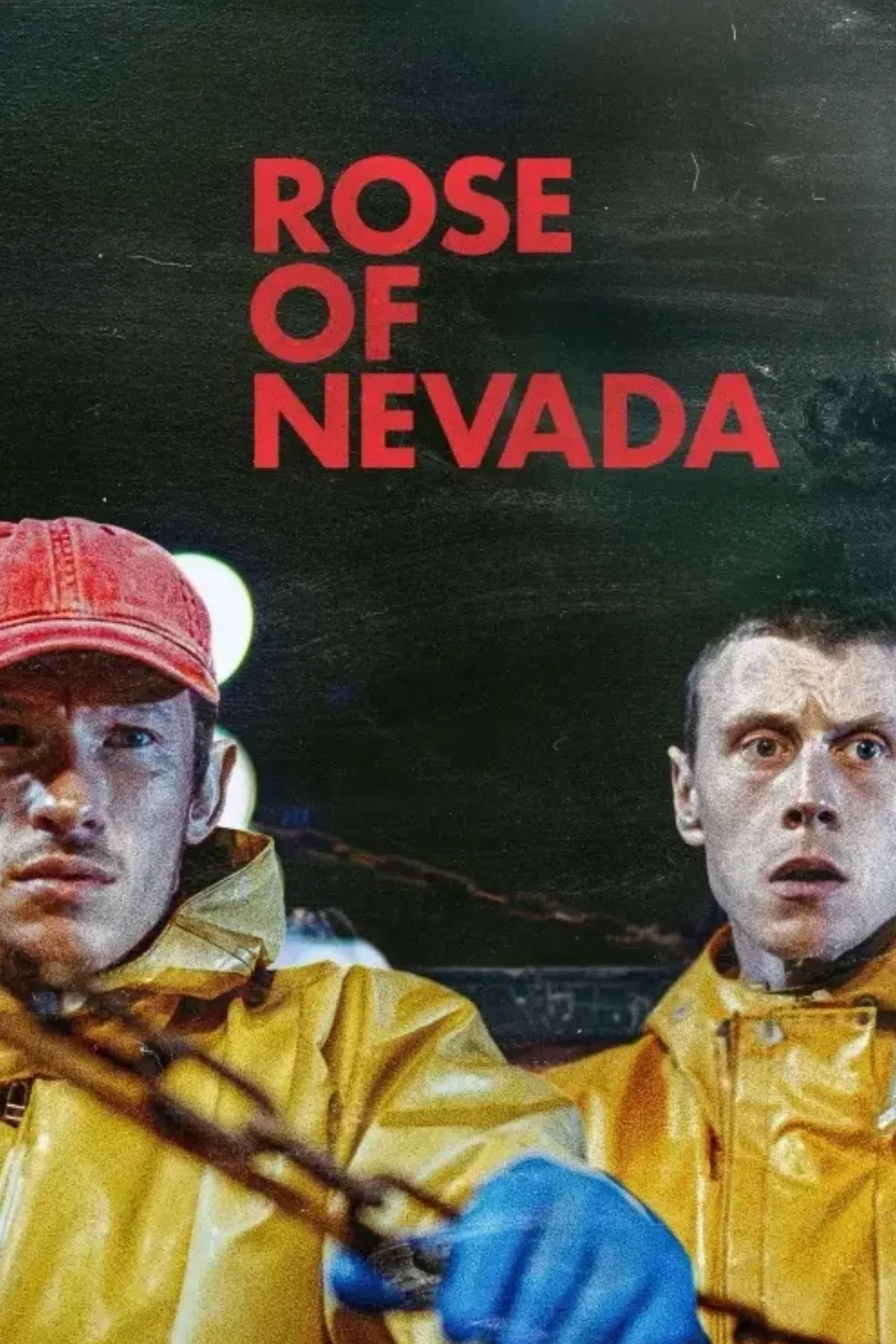
Rose of Nevada (2026)
- Cast: George MacKay, Callum Turner, Francis Magee
- Director: Mark Jenkin
- Genre: Drama, Mystery
- Runtime: 114 minutes
- Rated: NR
- Release Date: June 26, 2026
- Movies Like Rose of Nevada: Miroirs No. 3, Backrooms, I Saw the TV Glow
- Follow us on Letterboxd