
I love a good procedural. Most of them come in the form of a crime procedural or a murder mystery, where detectives chase down leads and the audience pieces together the puzzle right alongside them. Every so often, though, one comes along that pulls its procedural bones from the historical record rather than a case file. Anthony Maras’ Pressure is one of those, and it’s a solid one.
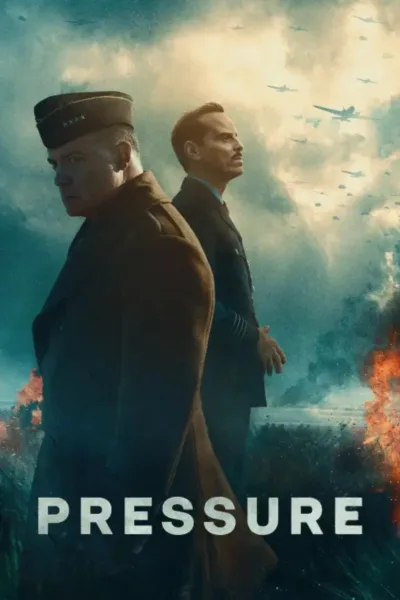
Adapted from David Haig’s 2014 stage play (Haig co-writes the screenplay with Maras), Pressure follows a group of meteorologists led by RAF Captain James Stagg (Andrew Scott), who are tasked with a life-or-death mission: charting the weather for the planned Allied invasion of Normandy, which we now know as D-Day. It’s Maras’ second feature after Hotel Mumbai, and once again he’s working with a true story where the clock never stops ticking.
To put it mildly, Stagg is a bit of a glum guy. He rarely smiles throughout the film, choosing instead to close himself off from the rest of his department as much as he possibly can. He deciphers the weather measurements alone and draws his conclusions by himself, which rubs plenty of his colleagues the wrong way. No one embodies that friction more than Colonel Irving P. Krick (Chris Messina), a fellow forecaster with a very different read on the skies and a much easier time working a room.
It’s a smart move on Scott’s part not to sand down Stagg’s edges. The character isn’t written to be undoubtedly likable, and Scott never begs us to like him. What he gives us instead is a man who understands the cost of being wrong better than anyone else in the building, and who would much rather be right than be liked.
Pressure plays the beats of a historical drama, but it shrinks the scale down as small as it possibly can while still being about nations pouring all of their efforts and resources into a single day’s worth of events, in hopes of turning the tide of World War II. Most of the film plays out in offices and briefing rooms, with men hunched over maps and pressure charts.
And yet the stakes couldn’t be bigger. The forecast Stagg eventually delivers (that the original plans for D-Day won’t hold up because of an oncoming storm, but that a brief break in the weather might offer the perfect window to strike) ends up shaping the world as we know it today.
It’s such a perfectly constructed, tiny little war movie, and it towers thanks to both its stakes and its supporting performance from Brendan Fraser as General Dwight D. Eisenhower. I’m pretty confident Fraser doesn’t completely capture Eisenhower in a historically accurate sense. That said, the version he brings to the screen is certainly more cinematic, and he fills every room he walks into.
And there’s the pairing itself. Scott and Fraser make for an interesting mix of oil and water: almost completely separate in their social tendencies and their sense of camaraderie, with Eisenhower glad-handing while Stagg retreats into his charts. But their goals align, and the film makes it clear that the two will reach that common goal by any means necessary.
READ MORE MOVIE REVIEWS: Filipiñana, The Only Living Pickpocket in New York, The Invite
Pressure plays like a typical dad movie, but it’s a really good version of a dad movie. It carries great historical weight, but it also has really solid performances and the rhythm that the best procedurals need. The fact that a film about D-Day meteorologists can stretch to 100 minutes without dragging speaks to the valuable work of Maras and Haig, both on the page and behind the camera. It knows what it is, and more importantly, it knows what it isn’t. Who would’ve guessed? The WWII movie about the weather is, indeed, quite fruitful.
Score: 7/10
Movie Details
Pressure (2026)
- Released
- Runtime
- 1 hr 41 min · 101 minutes
- Rated
- Director
- Anthony Maras