A movie so completely confident in moving to the beat of its own drum that it’s willing to embrace near-total inaction, Rafael Manuel’s Filipiñana is one of the best slow-cinema films of the decade. It’s an observant, deeply unsettling examination of the social and economic divisions that have shaped the Philippines for generations, using a Manila golf course as a microcosm of the distance between how the wealthy live and how the working class survives. It’s a film that doesn’t need to shout to make its point, and certainly doesn’t feel the need to rush toward it. Instead, it lets you sit with the circumstances of the people occupying this world, and the uncomfortable realization that so many of them seem powerless to change it.
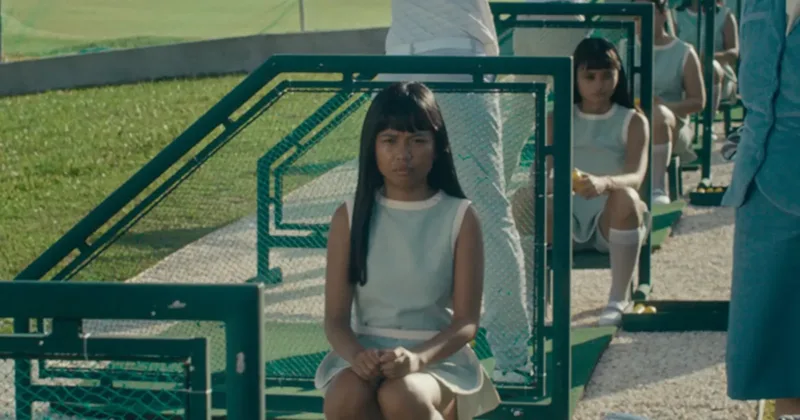
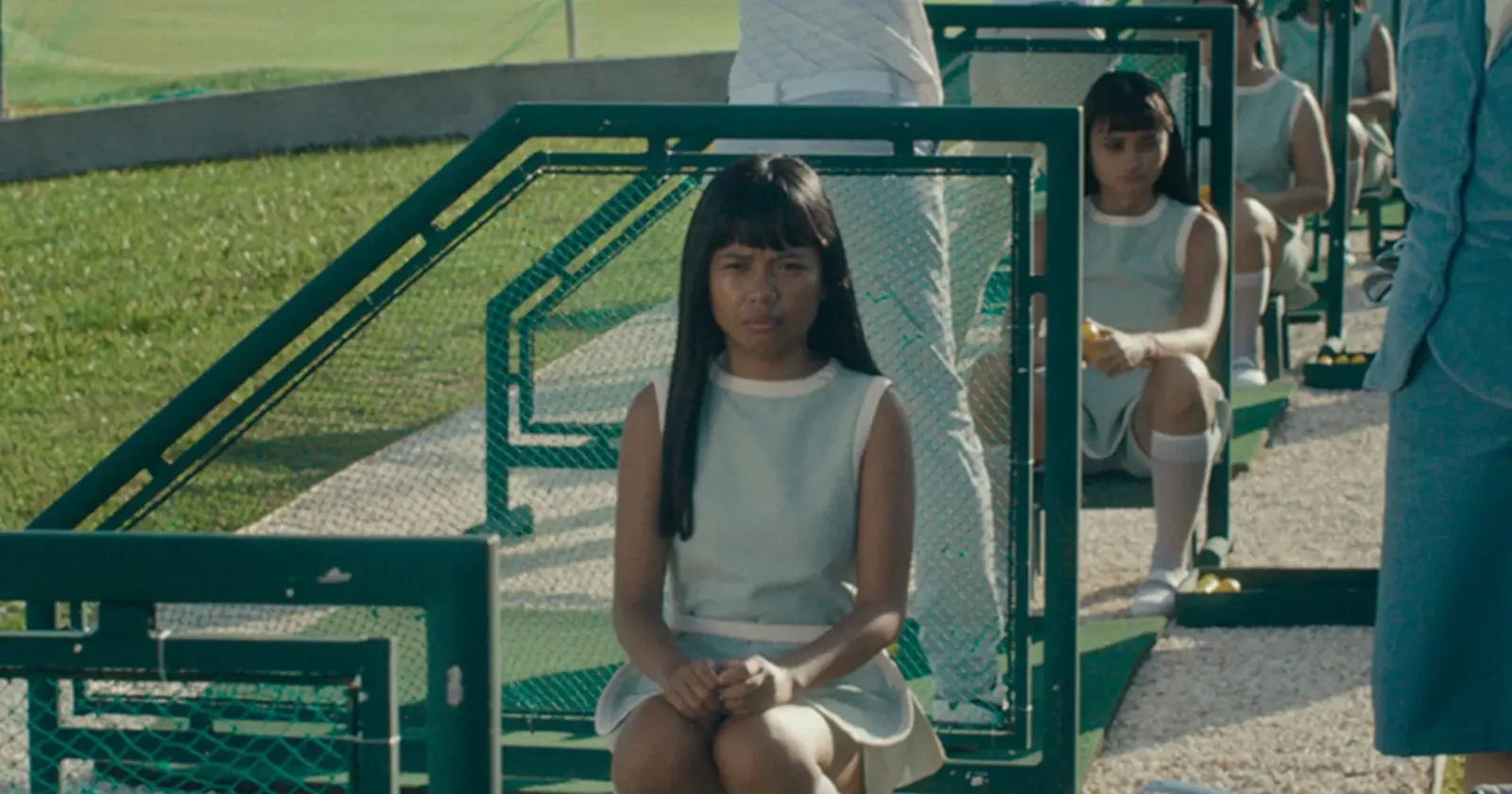
In a pointed opening sequence, tourists ride a bus through the city as lower-class residents scrounge for whatever drinkable water they can find among the limited supplies being rationed out. It’s a brief but effective introduction to the film’s central divide, before we hard-cut to what might as well be the opposite side of the world: a luxurious, resort-like country club with a beautifully manicured and heavily irrigated golf course. Of course, these two worlds aren’t separated by any great distance. They’re right beside one another. Seventeen-year-old Isabel (Jorrybell Agoto) works at the club as a tee-girl, tasked with placing golf balls on the tee for wealthy patrons so they don’t have to bend down themselves. There’s a general malaise among the employees and patrons alike, but for very different reasons. Isabel and her fellow workers have inherited a world that breaks them down, while the people paying to enjoy the club have inherited one that builds them up. If you’re a tee-girl, you’re expected to conform to that role, do your part, and never speak up or stand out.
Filipiñana bears the remnants of a plot, but it doesn’t move from one set piece to the next like a typical narrative feature. Isabel is assigned to the club’s president, Dr. Palanca, whom she finds fascinating after learning they share Ilocano roots. She’s eventually given a golf club to return to him, sending her on a slow journey through the country club’s various luxurious rooms and amenities. As she moves through the complex, she gets a glimpse of the excesses available to the wealthiest members of society, while she and her fellow tee-girls eat and sleep shoulder-to-shoulder. The contrast is never particularly subtle, but Manuel doesn’t need it to be. The entire environment is designed around the comfort of one class of people and the labor of another, and the film patiently observes how everyone has come to accept their assigned place within it.
READ MORE MOVIE REVIEWS: The Only Living Pickpocket in New York, The Invite, Making Marie Antoinette
This is very much a movie you let wash over you. Its intentions are clear early on, but that doesn’t make the experience any less absorbing. Jorrybell Agoto has an incredible screen presence, bringing a quiet curiosity and unease to Isabel without needing to announce either one. The visuals are equally remarkable, with cinematographer Xenia Patricia capturing the golf course in a way that’s almost deceptively inviting. There’s a lushness and serenity to the imagery that makes the environment look like paradise, even as we understand the exploitation required to maintain it. The pacing, meanwhile, becomes part of the film’s argument. Life for the wealthy is slow, peaceful, and, well, fun. They have all the time in the world to enjoy themselves. The working class is tired and hungry, waiting for the day to end only to begin another round of the same suffering. The rich are ultimately nothing without the workers they exploit to maintain their image of wealth and perfection.
The closest the film comes to a conventional narrative arrives when its two separate threads finally converge. Among the club’s patrons are a golf-equipment businessman and his niece Clara (Carmen Castellanos), who has recently returned from studying overseas in New York. Her uncle hopes to convince her to work for him and help curb the country’s brain drain, but Clara is less enthusiastic after witnessing how the wealthy treat the less fortunate in the Philippines. She sympathizes with the workers, including the caddie assigned to her, and seems to possess more of a conscience than most of the people around her. But there’s a similar complacency to Clara, too. She understands how bad things are, yet seems unable to do much of anything about them.
That contradiction becomes devastatingly clear when one of Clara’s golf balls accidentally strikes a young girl. Horrified and almost catatonic after seeing the child’s body, Clara remains frozen as her uncle callously orders a caddie to help move the body to one of the course’s retention ponds. Isabel eventually comes across the girl floating in the water and tries to call for help, only to find that nobody is willing to respond. She swims out to see whether the girl might still be alive, but eventually disappears beneath the water herself as the credits begin to roll. It’s a bleak, deeply upsetting conclusion, suggesting that Isabel is just another young girl consumed by a system that has spent her entire life treating people like her as disposable.
Manuel has described the film as being about inaction, not as a moral failing he’s simply blaming his characters for, but as a question of why acting is so difficult when the people in power have already shaped every choice available to you. Both of the film’s climactic moments play directly into that idea. Isabel has Dr. Palanca, the man responsible for her family’s eviction, asleep in front of her with a golf club in her hands. She has an opportunity to strike him, but can’t bring herself to do it. Clara, meanwhile, is arguably the most principled person in the club. She refuses to make her caddie do her dirty work, yet still ends up in the passenger seat of her uncle’s car after watching him conceal a child’s body.
And that’s what makes the final stretch so acidic. The club, built on stolen land and kept green with water that the city around it desperately needs, absorbs the entire incident without missing a beat. Even a dead child can be hidden away in its retention ponds, and the people responsible can carry on with their lives. The film’s final image is not only a devastating outcome for Isabel, but an extension of the world we’ve been watching all along. In a system designed to keep everyone in their place, even the smallest act of conscience, like calling for help, can go unanswered.
READ MORE MOVIE REVIEWS: The Cycle, You Can See Everything, Wicker
Filipiñana is deeply, deeply dark, and tough to watch at times, but not because its pacing is especially demanding. It’s the sheer starkness of the divide between the wealthy and the poor, and the apparent unwillingness or inability of anyone to do something about it, that makes the film so difficult to sit with. For as searing as it is about these issues, it never feels showy or self-congratulatory. Manuel trusts the images, the performances, and the circumstances he’s created to do the work, allowing the film’s anger to emerge through observation rather than grandstanding. It’s an incredibly assured debut, authentic in its perspective and massive in its urgency. One of the best films of 2026, and one of the best debut features of the decade.
Score: 9/10

Movie Details
Filipiñana (2026)
- Released
- Runtime
- 1 hr 41 min · 101 minutes
- Rated
- Director
- Rafael Manuel
- Genre
- Drama
If You Liked This