It’s still kind of incredible that somebody at Steven Spielberg’s age, who has been making large-scale movies for mass audiences for decades, can still take on projects of this size. Disclosure Day is a more action-packed thriller than I expected him to take on, though maybe that shouldn’t be too surprising from a filmmaker who remade West Side Story only five years ago without cutting any corners. That film’s visual style completely fits the musical genre, and at times it’s pretty breathtaking stuff. He’s taking on more daunting material here, with several converging and diverging plotlines and plenty of different sets and action set pieces. It’s certainly not his first rodeo with aliens, either. Spielberg is essentially synonymous with the subgenre at this point, towering over every other movie about intergalactic beings with the likes of E.T. the Extra-Terrestrial and Close Encounters of the Third Kind.
It’s well-traveled ground for him. So any time he returns to it, whether for a full movie or in glimpses like the endings of A.I. Artificial Intelligence and Kingdom of the Crystal Skull, it’s worth seeing not only the master’s new depiction, but whether he has anything new he’d like to disclose about them.
The film smartly shifts the question from whether these lifeforms exist to how exactly they’d be revealed to the greater public. Spielberg wastes little time on exposition and kicks into high gear almost immediately, opening on what feels like the second act of most movies. Cybersecurity whistleblower Daniel Kellner (Josh O’Connor) is on the run with stolen proof of alien life, including evidence of mid-20th-century UFO crash landings. He was supposed to protect it for his employer (now, surely, ex-employer) Wardex and its company head, Noah Scanlon (Colin Firth).
We learn his backstory, and the defectors’ plan, through a series of conversations between Daniel and fellow Wardex whistleblower Hugo Wakefield (Colman Domingo). Their goal is a full-blown “disclosure day,” when the whole world learns that we aren’t alone.
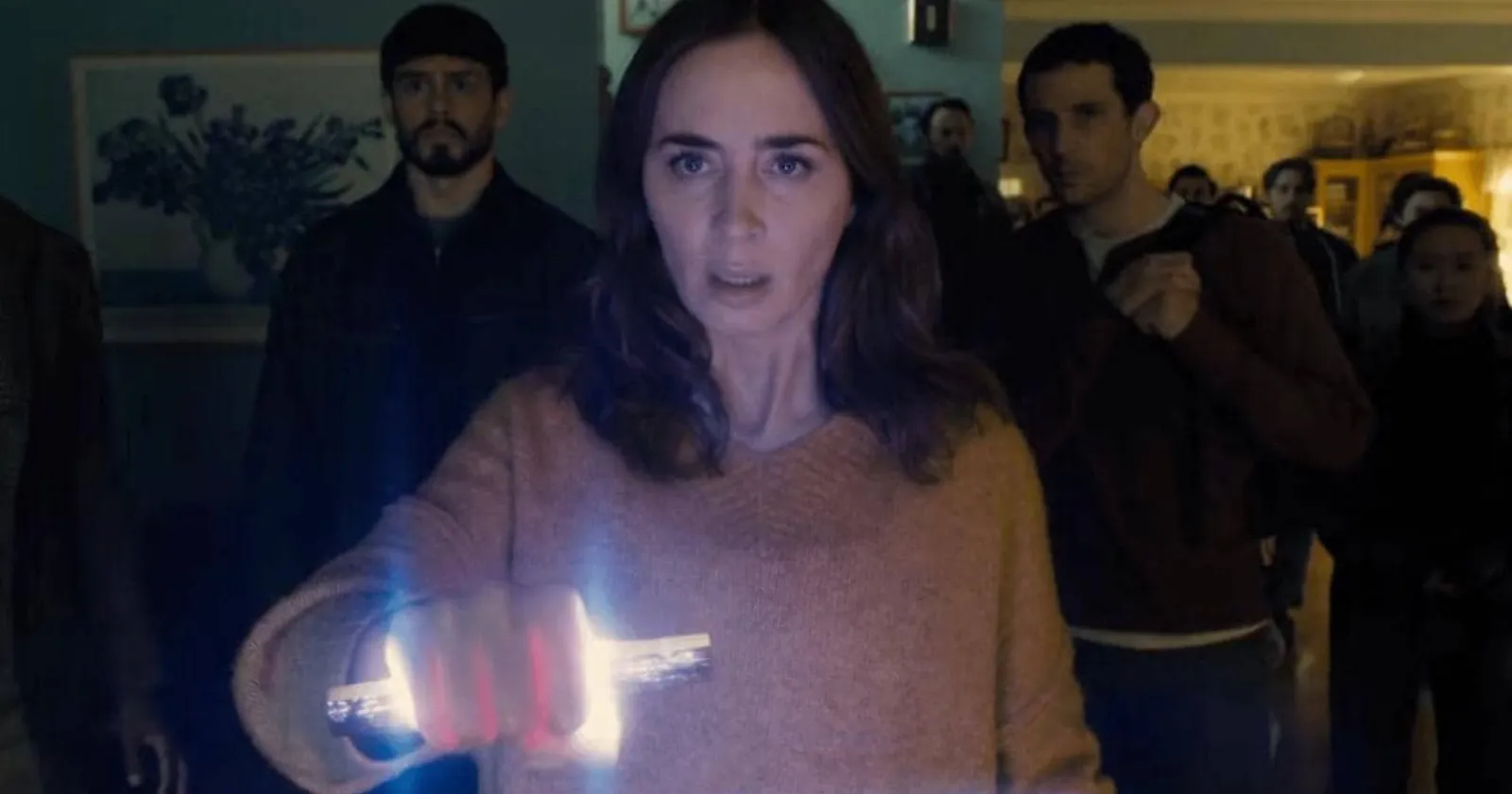
Meanwhile, Kansas City TV meteorologist Margaret Fairchild (Emily Blunt) starts having a series of increasingly odd things happen to her and around her. She can suddenly speak several languages fluently, and she’s developed a Spidey-sense of sorts, following her intuition to find exactly the people she needs without any rhyme or reason. The two are drawn together by what we eventually learn was a shared alien abduction at a very young age. It has tied them together ever since, only reactivating now as the aliens assimilate further onto Earth through animals like birds and deer.
Through all of this, Spielberg digs into the ethics of a private corporation owning these secrets. Do they belong to all of civilization, or are they being wisely kept for the security and betterment of the public? More than once, the film also asks how much of a role religion should play in whether we learn about these beings, since religious theology and extraterrestrial life aren’t typically thought of hand in hand.
O’Connor and Blunt are pretty good in their roles. Through the first hour, they’re spliced into their own separate plotlines until they finally converge at Wakefield’s warehouse. Both carry their individual sections well: O’Connor as a paranoid everyman on the run, and Blunt as a weatherwoman overcome by paranormal happenings that affect her both mentally and physically.
That said, they’re working with a script by David Koepp (from a story by Spielberg) that moves at breakneck speed but admittedly doesn’t offer the director much that’s new. Given how long he’s been doing this, it’s a worthy entry in his filmography. It’s just lacking in specificity and ingenuity, both in the details of the aliens’ emergence and in the action meant to keep you engaged on the way to its grab-at-your-chest finale.
It builds to a few signature action set pieces, including a sequence with the pair’s car caught under a moving train. It’s among the most marketable moments in the film, and, to be frank, I just didn’t think it looked all that good. Spielberg will give you a few of the most elegantly crafted, well-lit and well-shot scenes you’ll see all year containing entertaining espionage and relative worldbuilding all right in a row. Then he’ll follow them with overly CGI’d, noisy nonsense that looks like it was shot on the same soundstage as the last few Marvel films and TV shows.
This has been the case for many of Spielberg’s action-heavy scenes since maybe Ready Player One, where he went way off the deep end with this kind of look. It really pulled me out of the movie. For a film without much specificity in its own script to also botch a couple of its most important sequences through the first two acts makes Disclosure Day an occasionally tough hang, one that pales in comparison to his alien movies of the 20th century.
And then there’s the climax, where alien life is revealed to the entire world. It’s narrated by a nationwide TV anchor played by an underappreciated Courtney Grace, who displays so much empathy in just a few lines that she cuts right through the theatrics of the final 20 minutes. In that stretch, Spielberg finally shows us these aliens on screen, along with the damage and testing the government has inflicted on them over the years.
READ MORE MOVIE REVIEWS: Possible Love, Pressure, The Only Living Pickpocket in New York
It’s an uneven movie. Its great moments are exceptionally thrilling and thoughtful, but it has some glaring stretches that feel formulaic as an action adventure, and its CGI-heavy action drops the ball. Still, I’ve long held the opinion that it’s really difficult to make a bad alien movie. And once again, Spielberg pulls through.
Score: 6/10
Movie Details
Disclosure Day (2026)
- Released
- Runtime
- 2 hr 26 min · 146 minutes
- Rated
- Director
- Steven Spielberg
- Cast
- Colin Firth, Colman Domingo, Elizabeth Marvel, Emily Blunt, Eve Hewson, Henry Lloyd-Hughes, Josh O'Connor, Wyatt Russell
- Genres
- Action, Adventure, Science Fiction, Thriller