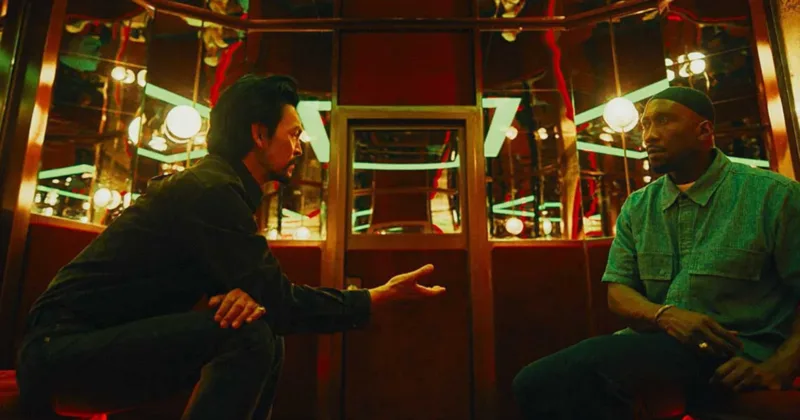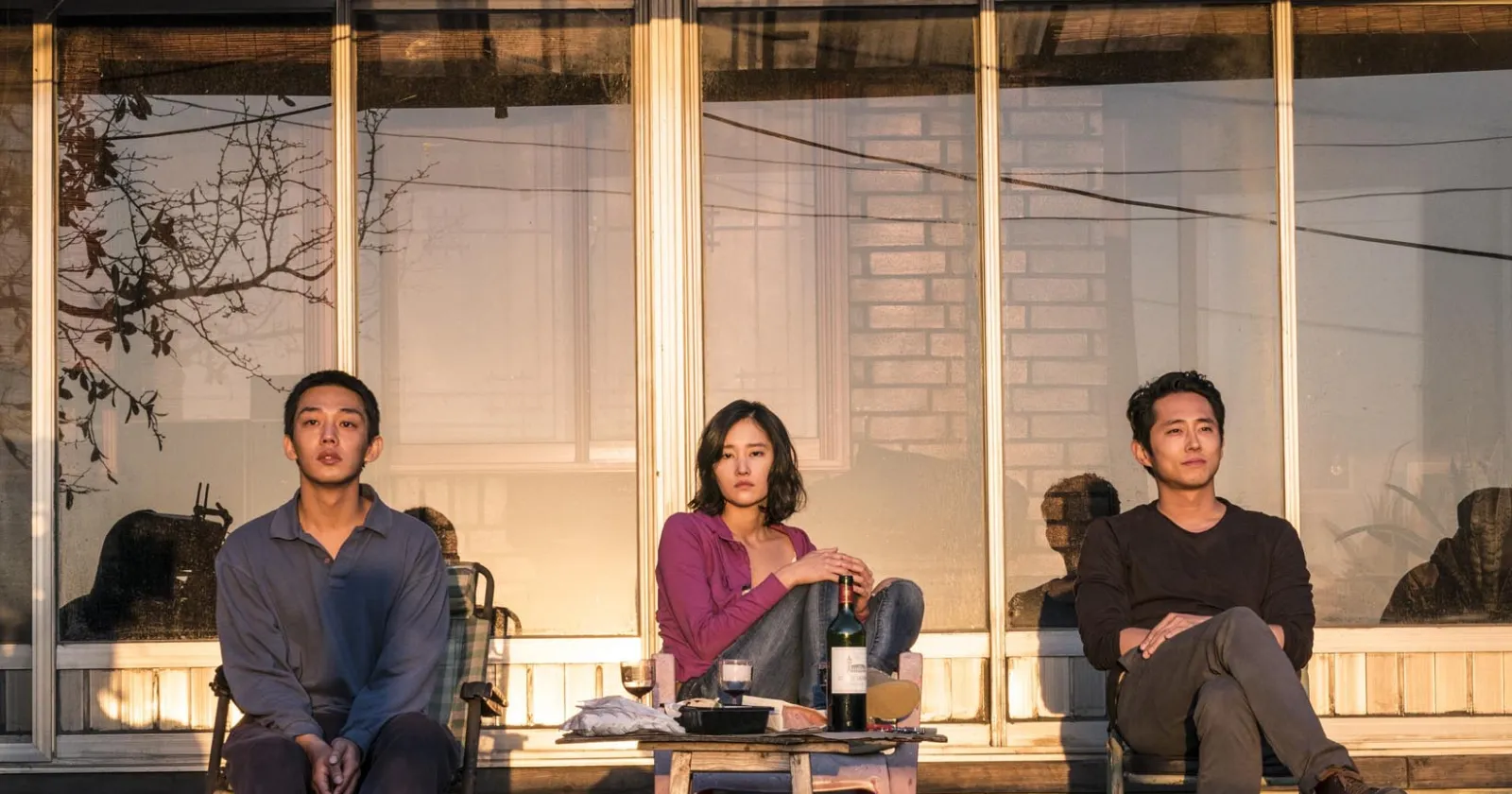
Eight years have passed between the last two films from Lee Chang-dong, the novelist turned one of cinema’s great directors: 2018’s Burning and, now, 2026’s Possible Love. Even so, the South Korean dramatist is working in a register that makes it difficult to take either film on its own, separate from the other. Part of that is because nobody seems to have their thumb on the pulse of the nooks and crannies of middle-class life worldwide quite like Lee does.
He understands the many ways that pressure shows itself, and how the world feels more fractured now than it ever has. He also understands who benefits from that fracture – the upper class, while everyone else is left to pick through the shrapnel.
In Burning, that pressure comes through the lens of Lee Jong-su, a deliveryman by day and incel by night. His fleeting, sort-of romance with a girl from his old neighborhood is cut short when she disappears, leaving him to wonder whether she simply up and left or whether something darker lies beneath the surface. Its acidic, bludgeoning mystery is what makes that film so compelling. Nobody sets up character in a first half only to pull the rug out in the second quite like Lee, and Burning marks the pinnacle of what makes his films so cataclysmic.
So he’s earned a bit of a break. He returns with a film that’s even more pointed at the disparity at its center. How the middle class claws for just one thing to go right that they can cling to. For Lee Jong-su, it was a love interest. For married couple Mi-ok (Jeon Do-yeon) and Ho-seok (Sul Kyung-gu), it’s the attention of documentarian Ye-ji (Cho Yeo-jeong), once again playing the well-meaning wife of an extremely wealthy businessman, not unlike her role in Bong Joon-ho’s Parasite.
Ye-ji has set her sights on a documentary about SP Heavy Industries, an automaker where Ho-seok worked as a respected welder. Then came massive layoffs and a rooftop strike that ended in bloodshed, killing several of Ho-seok’s coworkers and friends and leaving him with scars, both physical and emotional.
The events of that protest hang over nearly every shot of Possible Love. Ye-ji mines for the details and the emotion of that day, and for how it has shaped Ho-seok and the community of laid-off workers attending therapy sessions and doing everything they can to move on. She’s well-meaning, but perhaps a bit closed off from the struggle of the working class. The film implies that her documentaries are funded in large part by her husband’s business dealings, which we only ever see from the surface.
Ye-ji is earnestly committed to depicting the sincere plight of the middle class, yet unwavering (or unaware) about the wealth she flaunts in front of them. Those around her keep looking up what her clothes, jewelry and accessories cost, measured against the necessities they struggle to afford just to get by.
Lee is deliberate in how he sets all of this up, splitting the film nearly in half. On one side, Ye-ji and her mysterious, wealthy husband Sang-woo (Zo In-sung) embed themselves in middle-class life as deeply as they can without ever living its day-to-day hardships, a la Sullivan’s Travels. On the other, Mi-ok, Ho-seok and their young son Cheol are offered to stay at one of Sang-woo’s lavish estates while Ye-ji wraps her documentary. She hopes to land a tell-all interview with Ho-seok, who has refused under any circumstances to share the scars of that day on the SP Heavy Industries rooftop.
That’s where Lee’s film clicks into place. Possible Love opens with a title card bearing one of the commandments referenced in Krzysztof Kieślowski’s Dekalog, “Thou Shall Not Covet,” and who is coveting what becomes one of the film’s central questions. Ye-ji, without ever truly realizing it, covets Ho-seok’s trauma for the sake of her documentary, never feeling that trauma herself and treating it more as an opportunity for artistic or financial gain. Sang-woo, meanwhile, finds Mi-ok’s free-spirited nature in line with his own preference for a life that never has to think about, or acknowledge, those less fortunate than him in any intimate way.
The only meaningful interaction Sang-woo and Ho-seok share in the entire film is a bathroom sequence. Ho-seok mistakes the bathtub for the toilet, and then Sang-woo walks in and does the same, knowing he’s wealthy enough that he’ll never have to deal with the aftermath, or care in the slightest.
In this way, and in many others, Possible Love is both more direct and more slippery than Burning. Its frequent flashbacks to corporate upheaval border on other recent foreign-language pictures like the aforementioned Parasite or Park Chan-wook’s No Other Choice. The malaise of Burning isn’t as present here. It’s as if Lee issued a stark, bleak warning with that film, felt that not nearly enough people listened, and decided the second warning shot needed more punch.
That said, this is one of the first of Lee’s films that I felt was a bit long in the tooth at 164 minutes. That’s more true of the first half than the second, where each character’s setup finally begins to reveal new layers as they’re isolated from the outside world.
Possible Love isn’t as stunning, bleak or incisive as Burning, though to be fair, I’m not sure any film has been since 2018. It finds Lee in a different register, but one that’s still incredibly detailed and nuanced, finding new angles on prescient material without resorting to punchier directing tactics. His camera lingers, observing the incredibly lived-in performances from the cast. Of the bunch, Sul Kyung-gu stands out: everything he does here registers as a man scarred by PTSD from that day on his employer’s rooftop.
READ MORE MOVIE REVIEWS: Filipiñana, The Invite, Serpent’s Path
The more I write about it, the more aspects of it I find fascinating and lingering. That’s a good sign, because I was far less sure of Possible Love after one viewing than I was of Burning. It sharpens its daggers for an hour, then begins to plunge them in, taking a more perilous look at where we’re inevitably headed. And not as a single-country predicament, but as one that affects us all globally, reaching an entire society as well as the individuals inside a single family.
Score: 8/10

Movie Details
Possible Love (2026)
- Released
- Runtime
- 2 hr 45 min · 165 minutes
- Rated
- Director
- Lee Chang-dong
- Genre
- Drama
If You Liked This