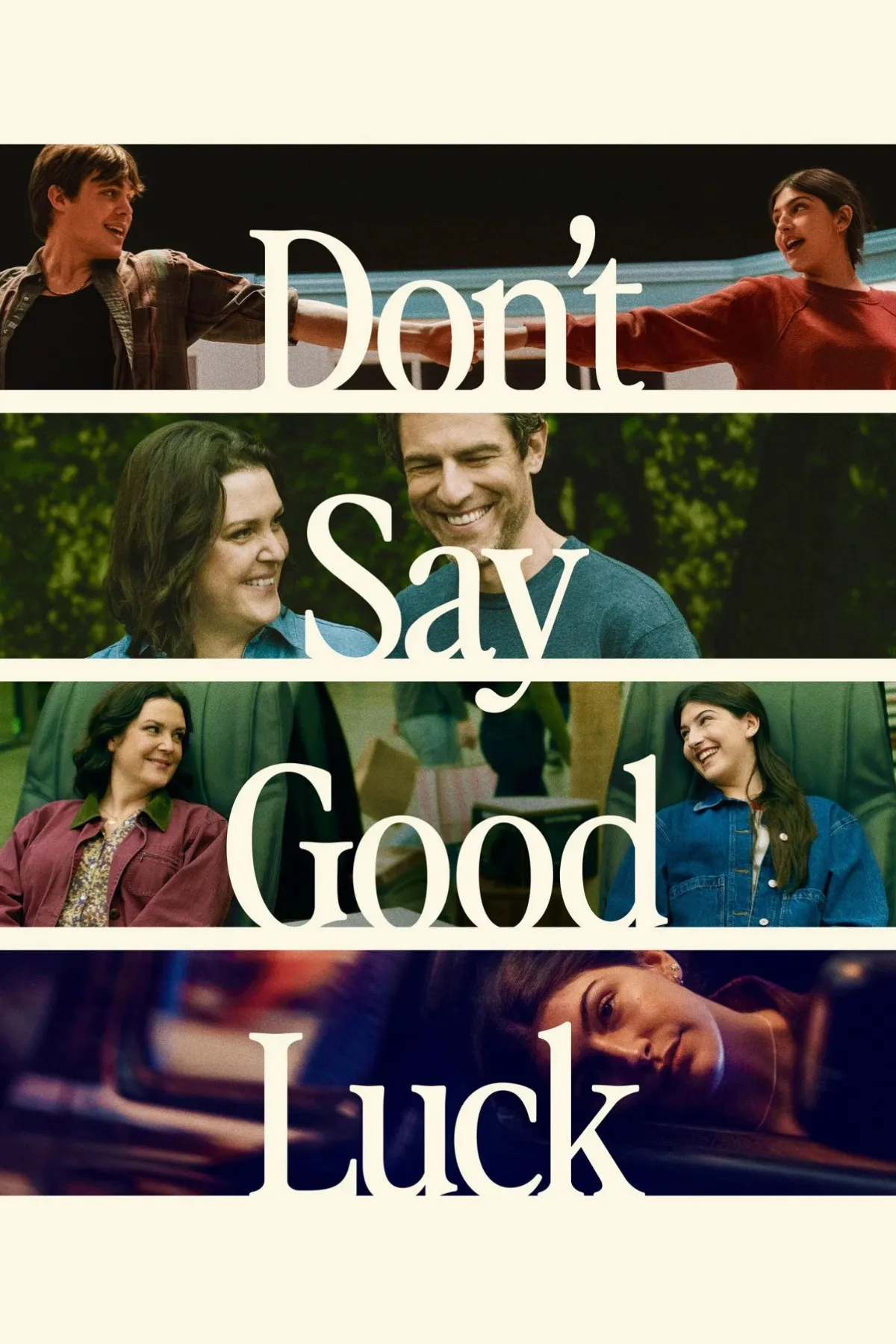
Don’t Say Good Luck isn’t the typical material Adam Sandler’s Happy Madison Productions concerns itself with, but it does fit into an increasingly apparent corner of the company’s output: giving Sandler’s daughters, Sunny and Sadie, opportunities to prove themselves as actors. Sadie co-starred in this year’s Roommates, while Sunny had a leading role in the surprisingly effective middle school drama You Are So Not Invited to My Bat Mitzvah. With Don’t Say Good Luck, she graduates into even heavier material, and proves once again that she’s more than capable of carrying it.
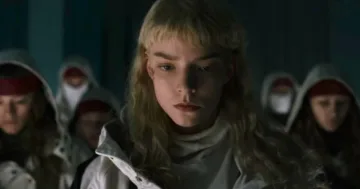
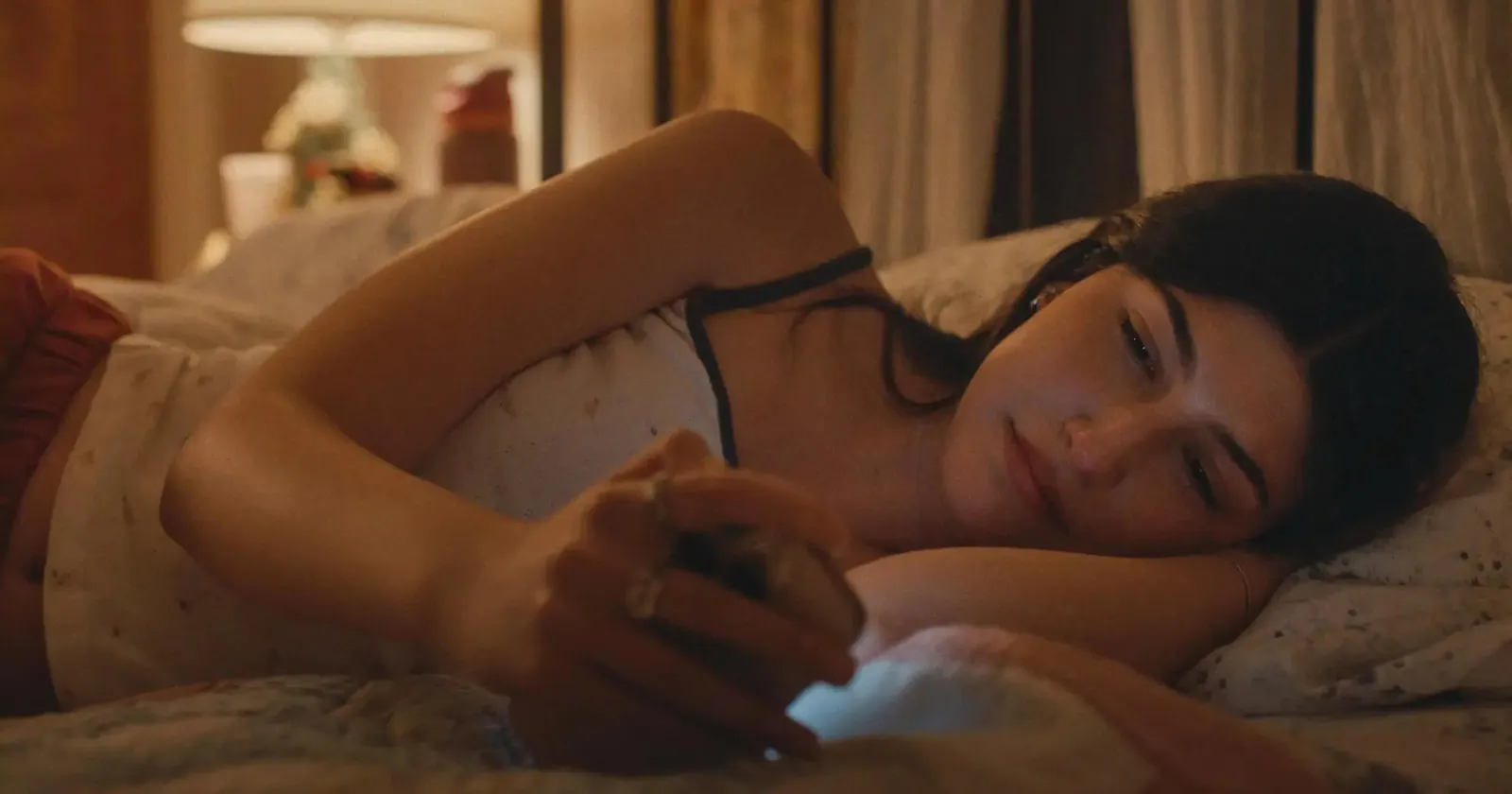
In some ways, the movie is still very much a high school drama. Sophie (Sunny Sandler) lands the leading role in her school’s play and navigates the usual crushes, friendships, and teenage anxieties that come with it. But those concerns are increasingly dwarfed by what’s happening at home, where her mother Elizabeth (Melanie Lynskey) is dealing with an aggressive cancer diagnosis that appears to be getting worse rather than better. Sophie’s attempt to compartmentalize those two worlds becomes the emotional center of the film, as the childish problems of high school suddenly feel both completely insignificant and impossibly important when contrasted with what her family is going through.
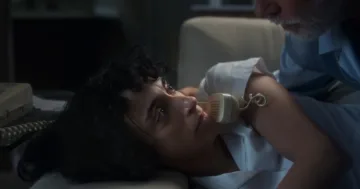
The entire cast meets the material at exactly the right level of sincerity. Sandler is really in tune with the teen angst that makes high school feel like the entire world, while also conveying how Sophie is bottling up the devastation happening at home until she inevitably can’t anymore. Lynskey is particularly good as Elizabeth, playing a mother who tries to downplay her worsening condition and maintain the appearance that she’s winning the fight, even when everyone around her knows the truth. There’s something particularly sad about watching her perform optimism for the sake of her family, and Lynskey gives the character just enough restraint to keep it from becoming too melodramatic.
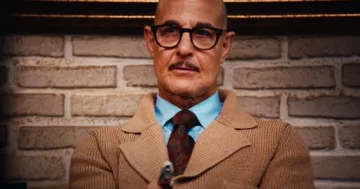
Max Greenfield is a surprise as Sophie’s father Ted, a performance that feels miles away from the comedic energy I typically associate with him from New Girl. He’s stoic and internalized, often communicating entire thoughts in only a few words, as though he’s trying to maintain some semblance of calm while everything around him is shifting daily. Julia Hart, whose previous films include Miss Stevens, Fast Color, and I’m Your Woman, deserves credit for keeping these two very different stories from constantly competing with one another. Her direction is relatively unobtrusive, putting the actors in the right positions to sell the material rather than trying to wring every possible tear out of it.
And Sunny Sandler really is quite good. There’s always going to be some degree of conversation around children of famous actors getting opportunities that other performers don’t, but I think that discourse becomes considerably less interesting when the person in question is actually this captivating. She showed it in You Are So Not Invited to My Bat Mitzvah, and she shows it again here: there’s a self-awareness to her screen presence that makes her feel considerably more mature than the material’s high school setting might suggest. She’s not just benefiting from the opportunities her family can provide; she’s proving that she can do something with them.
READ MORE MOVIE REVIEWS: The Rivals of Amziah King, Teenage Sex and Death at Camp Miasma, The Last House
My biggest hesitation is less about Don’t Say Good Luck itself than it is about the genre it occupies. I feel like we’re increasingly over-indexed on cancer dramas, particularly the kind that Netflix seems determined to produce at regular intervals. Cancer is obviously one of the most devastating things a person can experience, watch someone experience, or watch someone watch someone experience, so these movies naturally lean on those emotions as their central dramatic engine. And while this is an effective version of that formula, it’s also the kind of movie I can imagine finding deeply affecting once and having very little desire to revisit afterward.
Still, there’s something to be said for a movie that simply gets its emotional register right. Don’t Say Good Luck isn’t reinventing the cancer drama or the coming-of-age movie, but it is sincere, well acted, and considerably more mature than most of the streaming dramas that occupy this space. Sunny Sandler continues to look like a legitimate young talent rather than simply an actor being handed opportunities because of her last name, while Lynskey and Greenfield both find new dimensions in material that asks them to play considerably outside their usual lanes. I don’t know that I’ll be rushing back to this one anytime soon, but the first watch worked exactly as it needed to.
Score: 6/10
Don’t Say Good Luck (2026)
- Cast: Sunny Sandler, Melanie Lynskey, Max Greenfield, Stephanie Beatriz, Bebe Neuwirth, Steve Buscemi
- Director: Julia Hart
- Genre: Comedy, Drama, Music
- Runtime: 96 minutes
- Rated: PG-13
- Release Date: August 14, 2026
- Movies Like Don’t Say Good Luck: Voicemails for Isabelle, Suncoast, We Live in Time, More Movies Like Don’t Say Good Luck
- Follow us on Letterboxd