Wasteman is the kind of movie I wish we got more often. There’s been no shortage of discourse over the last few years about the supposed death of the movie star. Personally, I’ve always thought that conversation misses the point. I don’t think Hollywood has run out of charismatic actors. I think it’s run out of roles that actually allow them to be movie stars. Too often they’re swallowed up by intellectual property or buried underneath spectacle instead of simply being asked to carry a film on their backs.
Cal McMau understands the assignment. Making his feature directorial debut after spending much of his career directing music videos, McMau strips everything down to the essentials. He locks two immensely talented actors inside a prison cell, gives them just enough plot to work with, and lets them spend the next ninety minutes going toe-to-toe. It’s a simple premise, but an effective one.
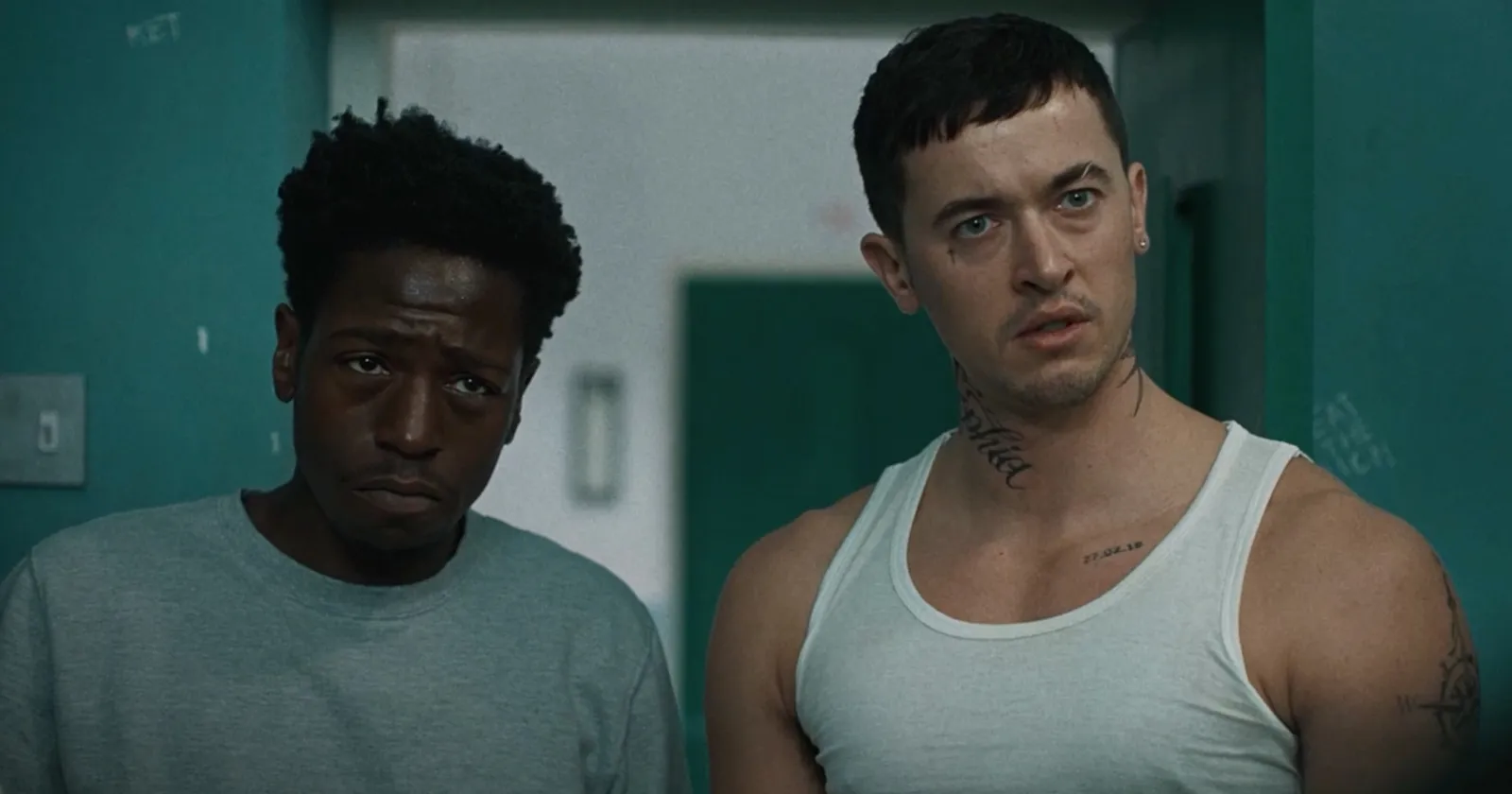
Taylor (David Jonsson) is only weeks away from being released on parole after serving thirteen years convicted of manslaughter for unknowingly selling drugs that resulted in someone’s death. He’s kept his head down throughout his sentence, rarely speaking to anyone unless it’s necessary. Even when we first meet him, he avoids eye contact, quietly cutting hair for fellow inmates in exchange for drugs that help feed his addiction.
Everything changes when he’s assigned a new cellmate. Dee (Tom Blyth) couldn’t be more different if he tried. Where Taylor keeps to himself, Dee immediately makes his presence known. He fills the cell with personal belongings, somehow manages to acquire luxuries that make the place feel more like a college dorm than a prison cell, and carries himself with the confidence of someone who has no interest in blending into the background. An air fryer. A Nintendo Switch. A cellphone that eventually gives Taylor his first meaningful connection to the outside world and, more importantly, to his son.
I’ll admit, I spent a surprising amount of the movie wondering just how much freedom these inmates are actually allowed. But that domesticity is also one of Wasteman‘s greatest strengths. Like the great movies of life behind bars like The Shawshank Redemption or Sing Sing, McMau understands that prison dramas are often most compelling when they’re focused on the small moments rather than the violence. Watching these men carve out tiny pieces of humanity inside concrete walls proves just as engaging as the inevitable conflict waiting around the corner.
Unfortunately, that conflict arrives sooner rather than later. Dee begins dealing drugs inside the prison, placing Taylor directly between competing factions on the block and threatening everything he’s spent over a decade working toward. Violence escalates quickly, and Taylor suddenly finds himself risking the freedom that once seemed almost guaranteed.
The film belongs almost entirely to its two leads. Jonsson plays Taylor with remarkable restraint. He’s quiet, reserved, and constantly seems to be thinking three conversations ahead before deciding whether it’s even worth speaking. It’s an incredibly understated performance that never feels like it’s begging for your sympathy.
Blyth, meanwhile, attacks Dee from the opposite direction. He’s loud, impulsive, endlessly charismatic, and seemingly incapable of avoiding trouble. Every decision Dee makes feels like the wrong one, but Blyth gives him just enough charm that you understand why Taylor can’t completely write him off. I honestly think it’s the best performance I’ve seen from him. The dynamic works because they’re operating on completely different wavelengths.
If I have any real complaint, it’s that the film occasionally pushes both characterizations a little too far. Taylor can feel almost impossibly patient and innocent, while Dee sometimes borders on becoming an agent of chaos whose only purpose is making bad situations even worse. Both performances remain strong, but the script occasionally nudges them toward archetypes instead of fully rounded people.
That’s also true of some of the supporting cast. The plot is refreshingly lean, but several side characters feel more like mechanisms to keep the story moving than actual people. Taylor’s relationship with his son carries genuine emotional weight, yet we only spend enough time with it to understand why it matters before the film quickly pivots back toward the growing hostility inside the prison. Likewise, Wasteman becomes so eager to reach the inevitable conflict between Taylor and Dee that it skips over building much of a friendship between them first.
That missing middle section is probably the biggest thing holding the film back. Still, McMau makes enough smart filmmaking decisions to overcome most of those shortcomings.
His handheld camera constantly pushes into tight close-ups that make the prison feel genuinely suffocating, and the near absence of correctional officers creates the uneasy feeling that these inmates have largely been left to govern themselves. Every decision Taylor makes feels like one he’ll have to live or die with because nobody else is coming to solve the problem for him.
READ MORE MOVIE REVIEWS: Carolina Caroline, Passenger, Obsession
For a debut feature, that’s pretty impressive. Wasteman isn’t reinventing the prison drama, nor does it need to. It’s a tightly constructed showcase for two actors who seize every opportunity they’re given, elevated by confident direction that understands exactly when to get out of its way. The script occasionally rushes through emotional beats that deserved more room to breathe, but those quibbles are few and far between. A strong debut from Cal McMau, and an even stronger reminder that sometimes all you really need is two great actors, one confined location, and enough trust to let them carry the movie themselves.
Score: 7/10
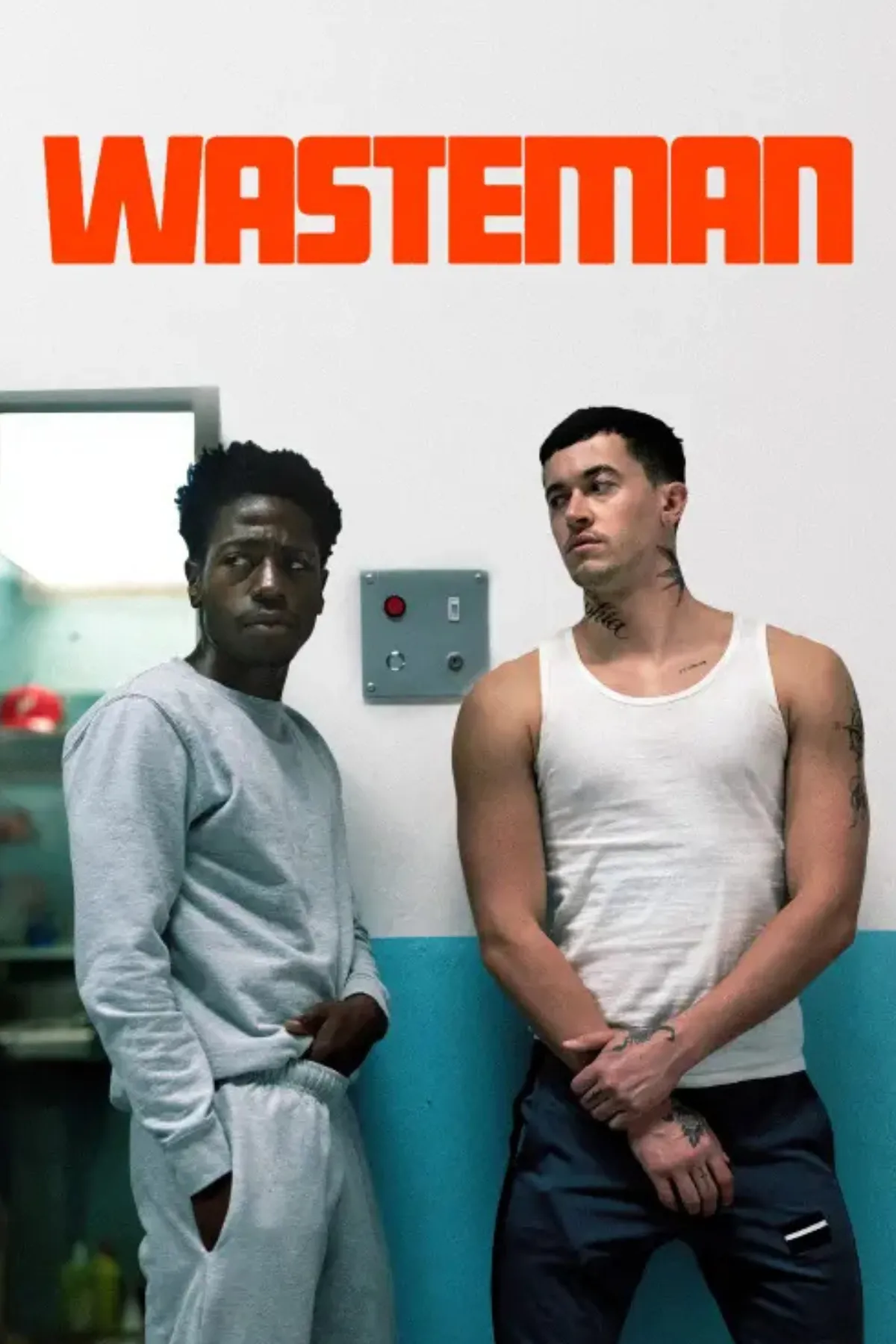
Wasteman (2026)
- Cast: David Jonsson, Tom Blyth, Alex Hassell, Neil Linpow
- Director: Cal McMau
- Genre: Crime, Drama, Thriller
- Runtime: 91 minutes
- Rated: R
- Release Date: May 19, 2026
- Movies Like Wasteman: Urchin, Sing Sing, Rebel Ridge, More Movies Like Wasteman
- Follow us on Letterboxd