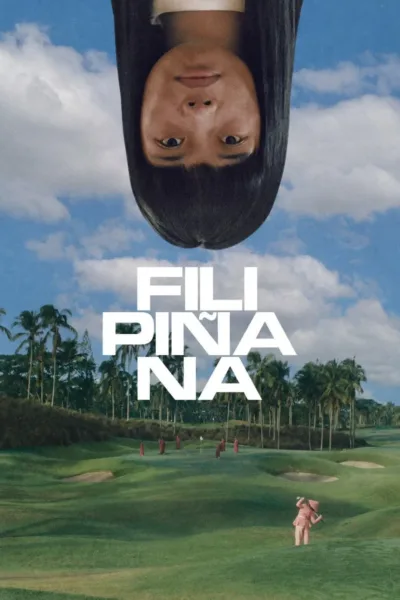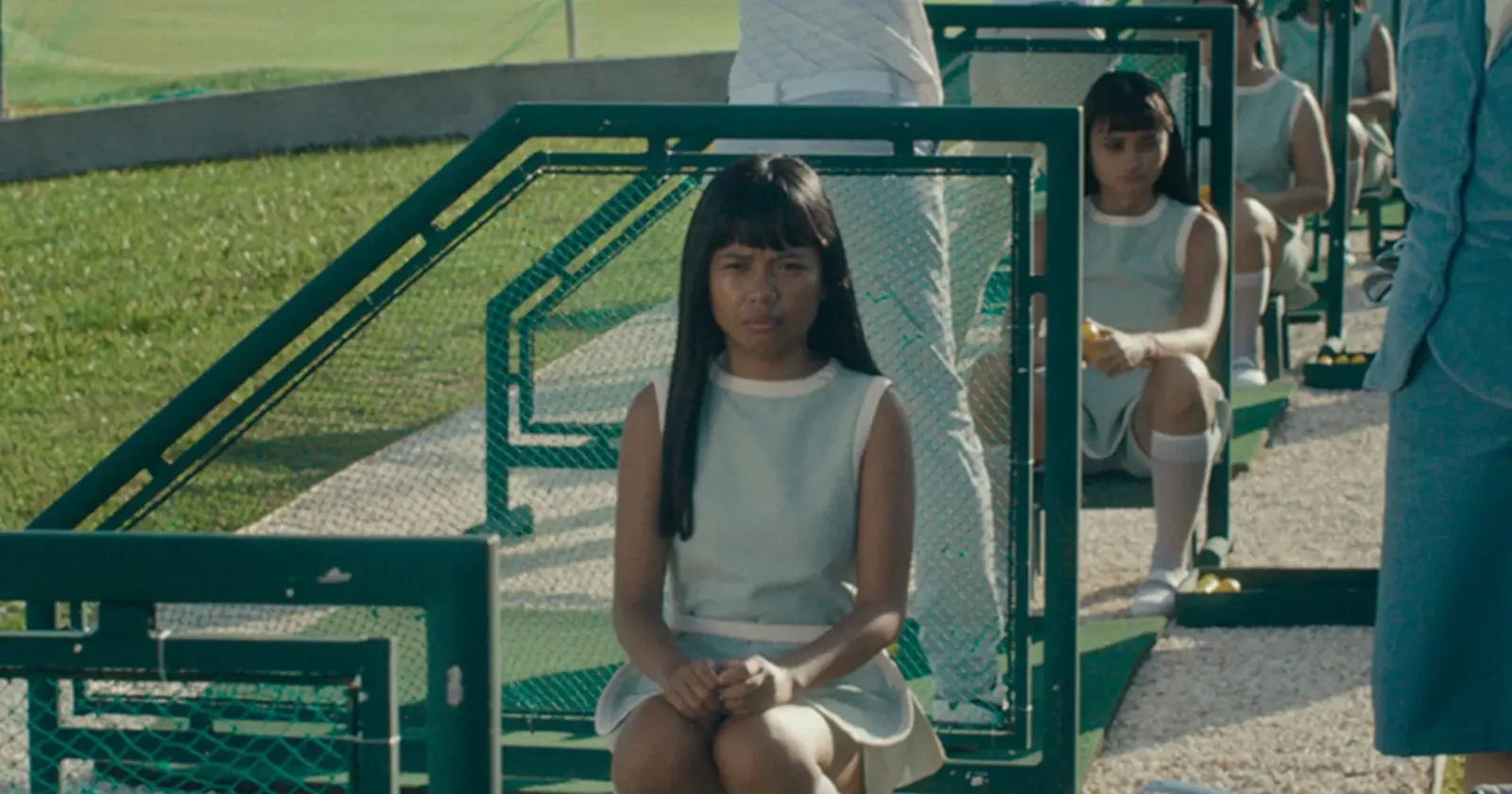
Filipiñana ends with its two young women each stumbling onto the rot beneath the country club’s pristine fairways, and each of them failing, in her own way, to do anything about it. Isabel (Jorrybell Agoto) spends the day trying to return a golf club to Dr. Palanca (Teroy Guzman), the club president who charmed her by speaking Ilocano. When she finally finds him asleep in his office, she watches through the window as workers load a felled pine tree onto a truck bearing his face, the same kind of truck that once forced her family off their land in Ilocos. Realizing his family was behind the eviction, she raises the golf club to strike him, then stops.
Meanwhile, Clara (Carmen Castellanos), back from New York and uneasy about how the club treats its workers, goes into a thicket to fetch her own stray ball rather than send her caddie, and finds the body of the missing girl with the dragonfly hairpin whom a nanny has been searching for all day. Her uncle coldly orders a caddie to help him dump the child into the course’s retention pond, then drives a shaken Clara away. In the final scene, Isabel finds the body in the pond and calls for help, but no one comes. The end credits start to roll as she wades into the water, golfers keep playing in the foreground, the truck carrying the pine rolls past in the background, and Isabel never resurfaces before the screen cuts to black.
Read our full review of Filipiñana
Does Isabel Die at the End of Filipiñana?
The film never explicitly says. Isabel seemingly goes into the pond to recover the girl’s body, but she doesn’t come back up before the film cuts to black, and Rafael Manuel leaves it there. Whether she drowns (which seems mostly likely), gives up, or simply disappears beneath the surface for a moment longer than the camera is willing to wait, the effect is the same: one more girl from the bottom of the club’s hierarchy vanishes into its water, and nobody on the course notices. That’s why the credits roll over the scene before the film is technically over. It’s a deliberate false ending that mimics the indifference of the club itself. The story of a missing child, and possibly a second, gets treated as background noise while the golfers play on.
What Does the Ending of Filipiñana Mean?
Manuel has said that the film is about inaction, not as a moral failing he’s blaming his characters for, but as a question of why acting is so hard when the people in power have already shaped every choice available to you. Both of the film’s endings play that out. Isabel has the man responsible for her family’s eviction asleep in front of her and a golf club in her hands, and she can’t bring herself to swing it. Clara is the most principled person in the club, refusing to make her caddie do her dirty work, and she still ends up in the passenger seat of her uncle’s car after watching him hide a child’s body. Manuel has noted that Clara has to start out principled so that she has somewhere to fall. The club, built on stolen land and kept green with water the city around it can’t get, absorbs all of it, the dead girl included, without missing a beat. It’s a bleak conclusion, but a pointed one: in a system designed to keep everyone in their place, even an act of conscience as small as calling for help can go unanswered.