In many ways, Nathan Fielder’s expansive documentary You Can See Everything is the perfect movie for the modern era. Following the 34 days leading up to Elizabeth Holmes’ imprisonment for fraud related to Theranos, the blood-testing company that promised revolutionary medical technology it ultimately couldn’t deliver, the film begins with a story that should feel familiar by now. The American grift is hardly new, and in 2026, it feels more embedded in pop culture than ever. Until Fielder and co-director Lance Oppenheim arrive to spend time with Holmes, her husband Billy Evans, and their children, Holmes is largely treated as just another disgraced public figure: someone who faked it until she made it, sold a lie, and became one of the relatively few people to actually face consequences for it. Positive portrayals of Holmes are difficult to come by, and Amanda Seyfried’s scathing performance in Hulu’s The Dropout has only helped cement her image in the public consciousness.
Which is precisely why Holmes supposedly agrees to let a documentary crew into her life in the first place. With her prison sentence approaching, she wants the world to see the “real” Elizabeth Holmes, rather than the person portrayed in the business press and dramatized in films and television. She’s unfamiliar with much of Fielder’s work, having seen only brief clips of Nathan for You, and seems less interested in explaining the science behind Theranos than in correcting the public’s perception of who she is. It’s an arrangement that is at least partially her idea, though her husband seems equally invested in the opportunity. From the outset, Billy Evans, a Silicon Valley businessman, gives off the impression of someone who is as much Holmes’ manager and personal PR team as he is her partner. He dictates when the crew can shoot, what questions Fielder can ask, and whom he can speak to. He’s intense, confrontational, and often abrasive, though I initially found myself questioning whether there was something more sinister beneath the surface or whether he was simply a difficult personality to be around.
Holmes, by contrast, is disarmingly calm. Her openness is so surprising that it becomes difficult to tell whether we’re seeing the person beneath the public image or another carefully constructed performance. The film repeatedly returns to a New York Times article suggesting that Seyfried didn’t actually play Holmes in The Dropout, but rather a character Holmes had invented (deliberately or not) and presented to the world. It’s a fascinating distinction, especially as the documentary itself becomes increasingly consumed by the question of who, exactly, these people are when nobody else is watching. Is Holmes finally letting her guard down, or is she simply giving the cameras another version of herself that she hopes will prove more sympathetic?
The first half is remarkable in how thoroughly it dissects the couple’s lives together. We see how they met, how they divide responsibilities, how Holmes’ family appears to regard Billy, and how the two discuss the possibility of relaunching Theranos with improved technology. The access feels unusually unbridled, but the filmmaking itself is anything but neutral. Fielder and Oppenheim employ a drowning score, uncomfortably intimate close-ups, and an approach to their subjects that feels less like conventional documentary observation than a slow plunge into madness. Fielder is patient when he needs to be and testy when he thinks he’s being evaded, repeatedly pushing the couple to confront not just the fraud that landed Holmes in prison, but the way the rest of the world sees them. There’s an uncomfortable tension in watching two people attempt to reclaim their reputations while a filmmaker seems increasingly determined to find the cracks in the image they’re presenting.
Then the documentary takes a turn that I doubt Fielder and Oppenheim could have anticipated when they began filming. Holmes goes to prison, and the crew largely steps away for the next two years, until Billy informs them that the technology for Theranos 2.0 is nearly ready to launch. Suddenly, Billy becomes the central figure, and the picture of their marriage that emerges is far more troubling than what we initially saw. He speaks about Holmes as though he can think for her, answer for her, and intuitively know what she wants without having to consult her. He suggests they rarely discuss the technology itself, while explaining that he manages much of her social media in her absence. What initially seemed like an overbearing personality begins to look like something more deeply controlling.
The film’s willingness to keep following these threads is where it becomes truly extraordinary. Through a series of retellings involving Fielder, Oppenheim, the A24 production team, and Seyfried (reprising her role as Elizabeth Holmes) and Christopher Abbott (as Billy), we learn that Billy negotiated a share of the documentary’s profits without Holmes’ involvement. Fielder confronts him over AI technology that allows him to generate videos of Holmes saying practically anything he wants her to say. Then comes an excruciatingly uncomfortable dinner sequence, in which the conversation turns to Billy’s power of attorney over Holmes’ social media, finances, name, image, and likeness while she’s incarcerated. Seyfried pushes back against Billy in a confrontation that veers between his self-proclaimed sexual prowess, the death of Charlie Kirk, and Seyfried’s own online reputation. It’s one of the film’s liveliest sequences, but also one of its most disturbing. The longer Billy talks, the harder it becomes to see him as merely an abrasive husband who wants to protect his wife.
The final hour takes another turn, becoming something like a pseudo-third season of The Rehearsal. Fielder repeatedly attempts to contact Holmes in prison, only to find himself dependent on Billy as an intermediary. When he finally gets to visit her, the cameras aren’t permitted inside, forcing him to document the encounter as thoroughly as possible and later reconstruct it in a script for Seyfried to perform. Sitting together by a fireplace, Fielder and Seyfried work through the details of the visit, with Seyfried even suggesting that Holmes’ passivity within the relationship resembles Stockholm syndrome. The sequence is both a practical workaround and a continuation of the film’s increasingly obsessive interest in reenactment: if the camera cannot capture the truth directly, how far can Fielder go to recreate it, and will viewers accept and believe his version of events?
There’s something revealing about the fact that Fielder seems to have developed a soft spot for Holmes, whether he’d admit it or not. Her personability has worked on him, regardless of whether it’s genuine or another carefully maintained façade. He insists that he’s simply trying to get to the truth, but the film exposes how difficult that claim is to separate from his own emotional investment. And if he’s being manipulated, does that make the documentary a failure, or does it make it an even more fascinating record of how manipulation works? The film never settles comfortably into one interpretation. Instead, every new revelation, every reconstructed scene, every return to a seemingly minor detail adds another layer to an already bewildering portrait.
It’s also a startling examination of the way documentaries and biopics shape our understanding of public figures. Fielder pushes back against Seyfried when she suggests that The Dropout was never intended to be the definitive truth about Holmes, even if its portrayal helped solidify the public’s view of her. Holmes was already widely despised, the argument goes, and the miniseries didn’t create that reputation so much as reinforce it. But how much of what we believe about people like Holmes comes from firsthand knowledge, and how much comes from the versions of them that other people have constructed? What happens when a dramatization becomes the dominant account of someone’s life, and the person being portrayed decides that the only way to correct the record is to invite another camera crew into the room? You Can See Everything doesn’t offer an easy answer, but its very existence makes the question feel urgent.
Like Fielder’s work on both seasons of The Rehearsal, the film is form-shattering in its willingness to keep escalating, pushing further into uncomfortable territory in pursuit of one more detail, one more conversation, one more reenactment. It’s also incredibly funny and deeply unsettling. Some moments are laugh-out-loud absurd; others are so bleak or excruciatingly awkward that laughter feels like the only reasonable response. The strange dynamic between Holmes and Evans, the possibility that the couple’s public-facing relationship is itself a performance, and Fielder’s own tangled position within their lives all make for a viewing experience that can feel almost impossible to look away from.
And that uncertainty is ultimately what makes You Can See Everything so compelling. Either Fielder has created one of the most extraordinary and unfiltered documentaries about high-profile public figures ever made, or he’s been played by two con artists who have figured out how to turn his interest in them into another opportunity for sympathy, money, or perhaps even a pardon. Holmes and Evans have appealed to the president for clemency, and the possibility that the documentary itself could become another instrument in that effort hangs over everything. Who is using whom? Is Holmes performing for the cameras, is Billy managing the performance, or has Fielder become so invested in uncovering the truth that he can no longer see how thoroughly he might be participating in another carefully staged illusion?
Seyfried’s presence is crucial to the film’s final stretch. Her attempt to inhabit Holmes again, this time as a woman in prison, gives Fielder a way to reconstruct scenes he otherwise couldn’t show us, while also adding another layer of mediation between the real person and the public image. Whether the performance succeeds as an accurate representation of Holmes almost feels beside the point. The fact that we’re watching an actress portray a real woman, in a documentary about that woman’s attempts to control how she is portrayed, is precisely the sort of recursive absurdity that makes Fielder’s work so fascinating.
READ MORE MOVIE REVIEWS: Wicker, Wildwood, Serpent’s Path
There are layers upon layers to You Can See Everything, and the film is blunt about so much of Holmes and Evans’ lives: how they treat one another, the good they believe they were trying to do, and their conviction that they’ve been misrepresented. But the more we see, the more there is to question behind the curtain. Perhaps Fielder has uncovered something genuine about two people who have spent years manipulating the world around them. Perhaps he’s been manipulated himself. Perhaps the truth is somewhere in between, and the desire to arrive at one definitive explanation is exactly what makes all of us so susceptible to the next great American grift. Whatever the case, You Can See Everything is a stunning, deeply uncomfortable, and darkly hilarious piece of filmmaking that keeps expanding its own boundaries until it becomes impossible to tell where the documentary ends and the performance begins.
Score: 9/10
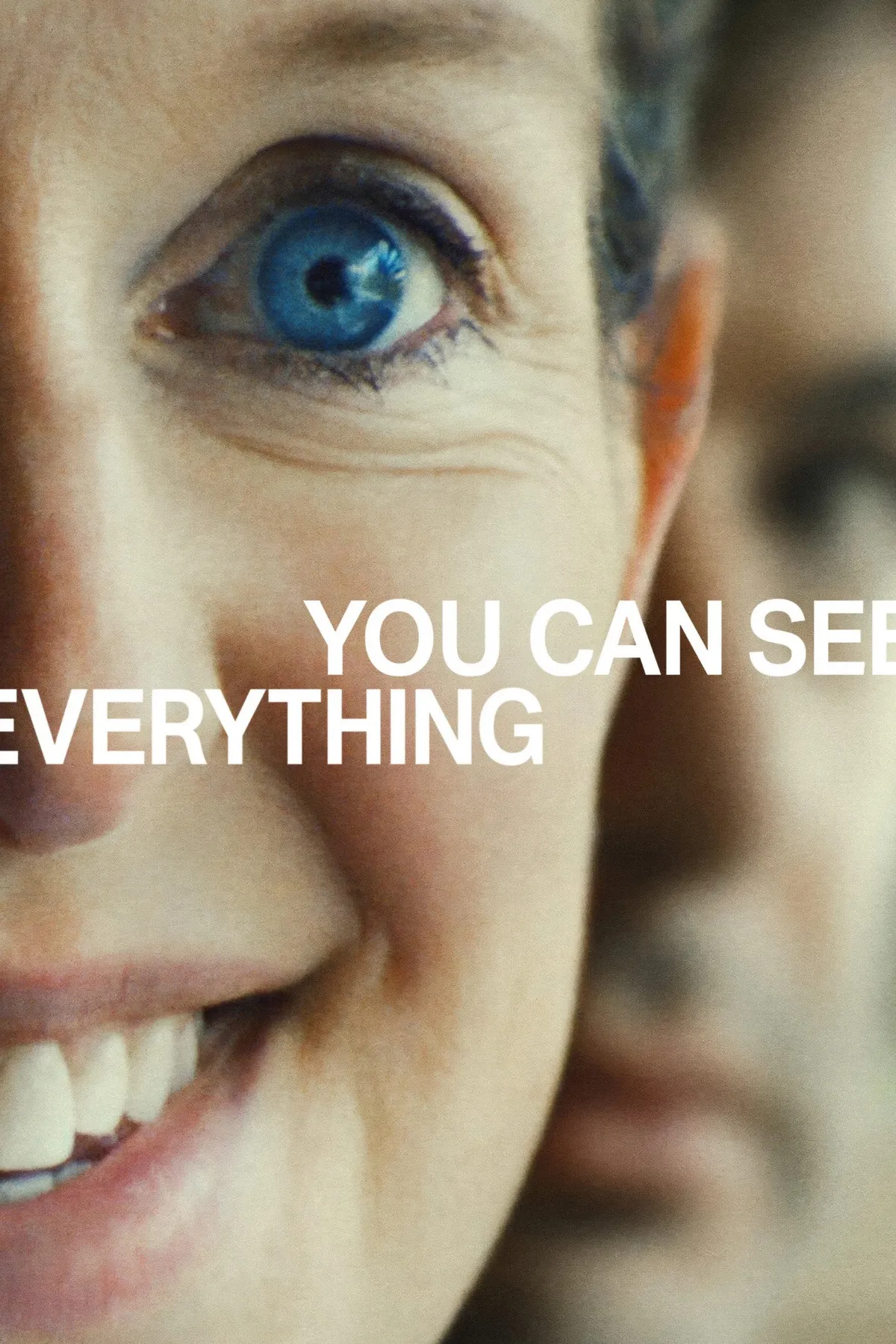
You Can See Everything (2026)
- Cast: Elizabeth Holmes, Nathan Fielder, Billy Evans, Amanda Seyfried, Christopher Abbott
- Directors: Nathan Fielder, Lance Oppenheim
- Genre: Documentary
- Runtime: 174 minutes
- Rated: R
- Release Date: October 16, 2026
- Movies Like You Can See Everything: Zodiac Killer Project, The Perfect Neighbor, This Place Rules
- Follow us on Letterboxd