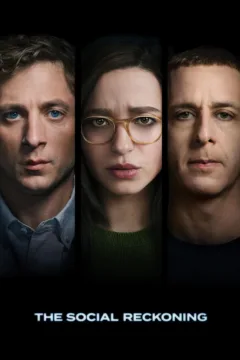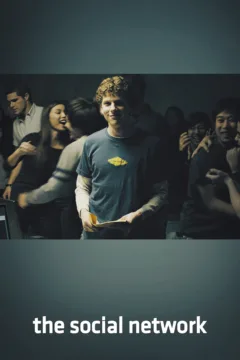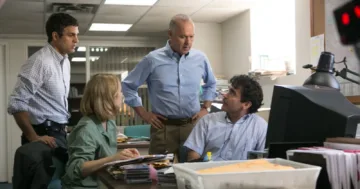
Across the board, The Social Network is one of the most confident and precise movies made in the 21st century. The writing, filmmaking, editing, scoring, and acting all come from individuals working at the very top of their respective fields. Aaron Sorkin wrote arguably the best script of his career, paired with what may be David Fincher’s best direction. Trent Reznor and Atticus Ross delivered a droning musical masterpiece that might still be my favorite film score ever, while frequent Fincher collaborators Kirk Baxter and Angus Wall pieced together a dense, layered picture of college programmers navigating the in-crowds and out-crowds of university life. It is a movie about doing anything and everything to make a name for yourself, to get people to know who you are, and to watch that notoriety inflate the ego of someone longing for (needing) that exact confirmation of his own existence. It is a perfect movie, or as close as any collection of talent has gotten to perfection this century.
Now imagine that, 16 years later, a sequel gets greenlit to cover the recent, fraught history of Mark Zuckerberg and his social media empire, specifically the 2019–2021 period when Wall Street Journal reporter Jake Horwitz closes in on bombshell reporting about Facebook’s negligence in moderating hate speech, inaccurate political ads, online bullying, and the many other consequences of its platform. Sorkin returns to write the sequel, but this time he also takes over directing duties, while nearly everyone else who helped assemble the original has cycled out for a hodgepodge of Academy Award and Emmy winners. Most notably, Jesse Eisenberg doesn’t return as Zuckerberg, with Jeremy Strong instead taking on the infamous Facebook figurehead and bringing along his familiar Succession and method-acting sensibilities. The short-short bowl cut is there, the matter-of-fact cadence is there, and the general sense that Strong has disappeared into the role is very much there.
Jeremy Allen White, fresh off starring in The Bear and being Jabba the Hutt’s offspring, plays Horwitz with the ho-hum sadboy charm we’ve come to expect from his work in Chicago’s kitchens, while Mikey Madison takes on whistleblower Frances Haugen in her first role since winning Best Actress for Anora. It is a talented ensemble, and there is plenty of good work happening across the board, but almost everyone involved is working in the shadow of a lightning-in-a-bottle 10/10 movie where every stylistic turn and creative decision was perfectly tuned. Fincher and Sorkin made the original snappy and breakneck, a movie that could make a conversation about intellectual property and college social hierarchies feel like a goddamn thriller. So watching The Social Reckoning slow-play its opening hour at such a solemn, tedious rhythm, matching the insular performances from White and Madison, feels like watching a movie pitching itself in an almost zombified tenor.
That isn’t entirely the fault of the performances. White plays a scruffy, weathered reporter quite well, with the same by-any-means-necessary determination to get the final draft over the finish line that Mark Ruffalo brought to Michael Rezendes in Spotlight. Madison’s performance also improves as the film progresses and Haugen grows more confident in her decision to become the story’s whistleblower. Both actors have a better handle on their characters as the movie goes along, and there are moments when the ensemble begins to feel like it might actually find a groove. The trouble is that Sorkin’s script is considerably weaker than I was hoping, and the movie spends so much of its first half establishing the machinery of the story that it forgets to make that machinery particularly interesting.
Sorkin is aggressively on the nose here, politically and thematically, almost as if he is taking a victory lap for having predicted this endpoint back in 2010. The script frontloads shoddy character exposition and corporate metrics, most notably the concept of MSIs, or “meaningful social interactions,” which becomes one of those corporate talking points that the movie seems only half-interested in actually incorporating into its storytelling. Then, in the back half, it swings hard in the opposite direction, laying out the social implications of what Facebook has built and the ways Zuckerberg has chosen to compartmentalize his decisions, even as the people around him try to talk him out of them.
There is, however, one performance that really surprised me: Bill Burr as Charlie Garrigan, a member of Zuckerberg’s council who pushes back against his increasingly immoral decisions and creates the most friction within his inner circle. Burr is the film’s most efficient performer given the amount of screentime he has, and his character becomes the catalyst for some of the most quintessentially Sorkin-esque moments in the script. There is a blowup between Charlie and Mark over Zuckerberg’s reluctance to moderate false political ads where my ears genuinely perked up and I found myself shifting in my seat. For a few minutes, it feels like a scene ripped from a different, more effective and lively Sorkin movie, one where the dialogue has that familiar rhythm and the competing perspectives are sharp enough to make you forget how much the rest of the movie has been dragging. You can almost feel Sorkin finally hit his stride as a writer.
His direction is a more mixed bag. This isn’t Fincher, but it isn’t pedestrian either, and I think it represents a step up from Being the Ricardos, even if it falls a little short of Molly’s Game. That latter film had a certain looseness and fun in its montages, and it was less self-serious about its larger societal implications. Those implications are certainly valid here, but they become a little startling when you realize that Zuckerberg’s practice hearing sessions take place on January 6, 2021, turning the movie into a kind of cipher for Sorkin to connect Facebook’s negligence to the Capitol riots. Again, there is a legitimate argument to be made about the role social media played in that moment, but the movie’s approach can feel so abrupt and blunt that it leaves little room for the audience to do any of the connecting themselves.
Sorkin recently noted that Eisenberg turned down the opportunity to return as Zuckerberg, and maybe that was a smart choice on Eisenberg’s part. Still, having him back would have helped bridge these two movies together, if only by giving the sequel a more direct connection to the original’s characterization and performance. There are some flimsy attempts to establish that continuity – Burr’s character references Zuckerberg building Facemash, for instance = but they feel more like reminders that this is technically a sequel than meaningful extensions of what came before. Fincher didn’t return either, instead opting to make his Cliff Booth movie, and I can’t help but wonder whether his precise, exacting direction might have been enough to bridge that gap on its own. Of course, I also wouldn’t wish the prospect of working 12-hour days under Fincher’s famously punishing directing tendencies on anyone, particularly not while Jeremy Strong is doing the full method-acting thing on the same set.
The movie does redeem itself somewhat in its back half, as the ensemble gets its turn delivering the kind of well-written monologues that Sorkin has made a career out of. The dialogue sharpens and the competing interests become more compelling, while and the film finally starts to feel like it has something urgent to say beyond simply laying out the details of Facebook’s negligence. But by then, the unevenness has already done its damage.
READ MORE MOVIE REVIEWS: Matchbox the Movie, Soulm8te, Primetime
It is, at best, serviceable. There are good performances, some terrific individual scenes, and an important story about the consequences of letting a handful of tech executives decide how billions of people interact with the world. But to call this The Social Reckoning and ask it to carry the weight of following The Social Network feels like a burden the movie was never equipped to handle. The original was about ego, ambition, and the desperate need to be seen, all delivered with such precision that the filmmaking itself became an extension of those ideas. This sequel is more interested in explaining the damage that followed, and while that damage is worth examining, it never quite finds the same cinematic language to make the examination stick. Maybe that was always an unfair comparison to make, but when you choose to follow up a near-untouchable masterpiece, the comparison is the entire ballgame.
Score: 5/10
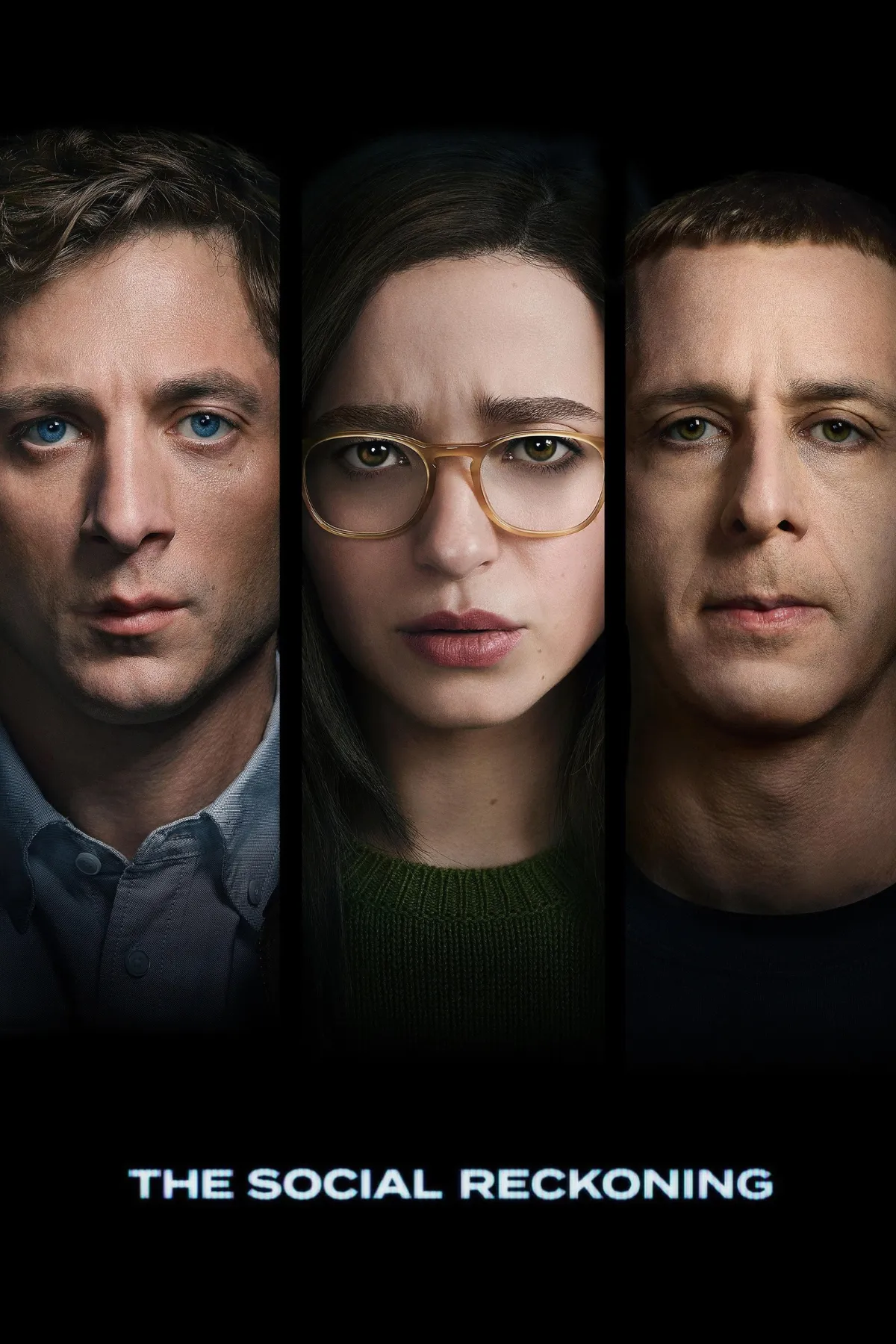
The Social Reckoning (2026)
- Cast: Mikey Madison, Jeremy Allen White, Jeremy Strong, Bill Burr, Wunmi Mosaku, Billy Magnussen, Betty Gilpin
- Director: Aaron Sorkin
- Genre: Drama, Thriller
- Runtime: 112 minutes
- Rated: R
- Release Date: October 9, 2026
- Movies Like The Social Reckoning: Juror #2, Killers of the Flower Moon, Civil War
- Follow us on Letterboxd