Netflix’s track record with romantic comedies has been a bit rough over the last decade, to put it mildly. More often than not, they feel cheaply assembled, half-written, or filmed entirely in front of green screens and sound stages that never quite convince you anyone actually occupied the same room together. It’s gotten to the point where I find myself skipping most of them unless they’ve either been recommended by multiple people I trust or have performers and filmmakers attached that I already enjoy. Voicemails for Isabelle lands in the latter category.
Mostly because of Zoey Deutch, who has quietly become one of the more reliable performers working today. Whether she’s showing up in auteur-driven projects like Richard Linklater’s Everybody Wants Some!!, studio films, or streaming originals, she never feels like she’s adjusting her effort level to match the material around her. She commits fully regardless of the budget, platform, or genre. Netflix already struck gold with her once in Set It Up, and she’s once again the biggest reason to give this one a chance.
That’s not to suggest Leah McKendrick’s latest directorial effort is being carried entirely by its lead performance. In fact, what surprised me most about Voicemails for Isabelle is that it has a bit more weight to it than the average streaming rom-com.
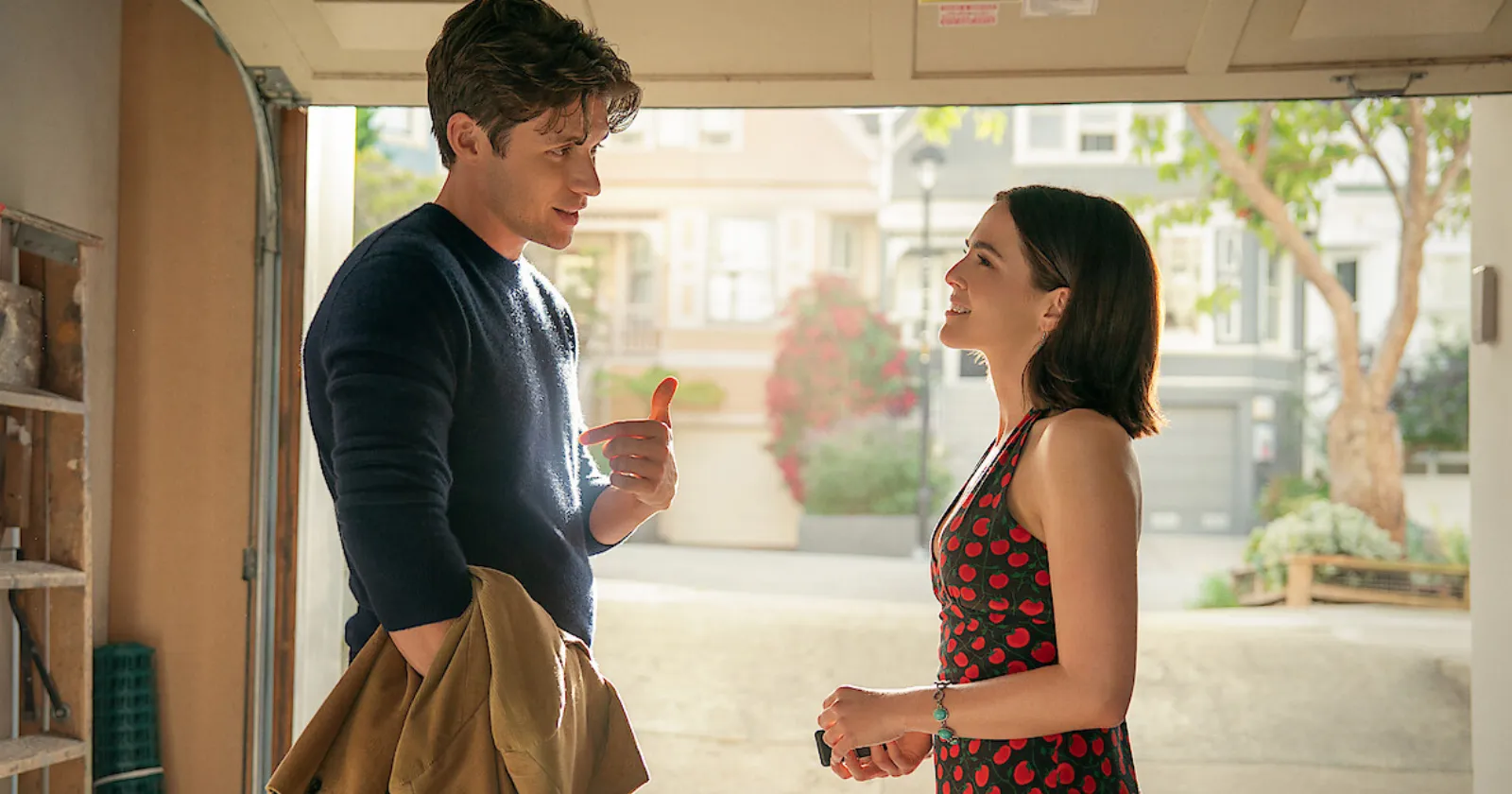
Deutch plays Jill, an aspiring baker who relocates to San Francisco while simultaneously attempting to process the death of her sister Isabelle, who lived with cystic fibrosis throughout her life. Between professional uncertainty, grief, and the isolation that comes with moving to a new city, Jill feels like she’s barely keeping her head above water. One of the ways she copes is by leaving voicemails on her sister’s old cellphone number, treating them as a private outlet for all the thoughts and emotions she can’t seem to organize anywhere else. The problem, or perhaps the entire premise, is that someone is actually listening.
That someone is Wes (Nick Robinson), who unexpectedly finds himself charmed by the wit, vulnerability, and humanity coming through these messages. You can probably guess where the story goes from there. Wes eventually travels to San Francisco for “work,” he organizes a way to meet her, and a relationship begins to develop. The complication, of course, is that Wes knows far more about Jill than she’s aware of, and secrets in romantic comedies tend to have expiration dates.
Deutch does the heavier lifting between the two, navigating grief, anger, loneliness, professional frustration, and eventual betrayal without ever making Jill feel inconsistent. There are a handful of scenes that ask her to overflow with emotions she’s spent the entire film suppressing, and she rises to the occasion every time. Robinson takes a steadier approach, acting as a grounding presence opposite Deutch’s more emotionally volatile performance. He gets a few surprisingly strong comedic moments as well, particularly during a delightfully awkward San Francisco tour bus sequence that ended up being one of the film’s funniest scenes.
Where Voicemails for Isabelle struggles is in how much it tries to juggle at once. The film is simultaneously a romance, a story about grief, a story about career ambition, a story about moving to a new city, and a story about family trauma. Those elements all work individually, but the editing sometimes struggles to weave them together smoothly. Early on, the film has a habit of jumping abruptly between emotional registers. A scene involving Jill processing her sister’s death might immediately cut to a coffee date, which then pivots into professional frustrations before moving onto another romantic development. The first stretch of the film spends so much time establishing every moving part that it occasionally feels a little messy.
Once the relationship between Jill and Wes becomes the primary focus, the film finds a much stronger rhythm and begins connecting its emotional threads in a way that feels more natural. The jokes start landing more consistently, the dramatic moments have greater impact, and the balance between romance and grief becomes easier to navigate.
It’s also probably about fifteen minutes too long. Pushing close to the two-hour mark is a tough ask for any romantic comedy, especially one that occasionally struggles with pacing. There are certainly scenes that could’ve been trimmed without losing much of the emotional payoff. Still, all things considered, I liked this quite a bit.
READ MORE MOVIE REVIEWS: Mother Mary, Obsession, Kontinental ’25
The humor works at a solid rate, the emotional beats are sold almost entirely through two committed lead performances, and I was never really bored despite the extended runtime. More importantly, it avoids feeling disposable, which is perhaps the nicest thing I can say about a Netflix romantic comedy in 2026. Voicemails for Isabelle isn’t reinventing the genre, nor is it trying to. What it does offer is a surprisingly sincere story about grief, connection, and the strange ways people find each other when they need someone most. That’s more than enough to make it stand out from most of its streaming contemporaries.
Score: 7/10

Voicemails for Isabelle (2026)
- Cast: Zoey Deutch, Nick Robinson, Ciara Bravo, Nick Offerman, Leah McKendrick, Harry Shum Jr., Lukas Gage
- Director: Leah McKendrick
- Genre: Comedy, Romance
- Runtime: 119 minutes
- Rated: PG-13
- Release Date: June 19, 2026
- Movies Like Voicemails for Isabelle: Eternity, Crossing Delancey, We Live in Time, More Movies Like Voicemails for Isabelle
- Follow us on Letterboxd