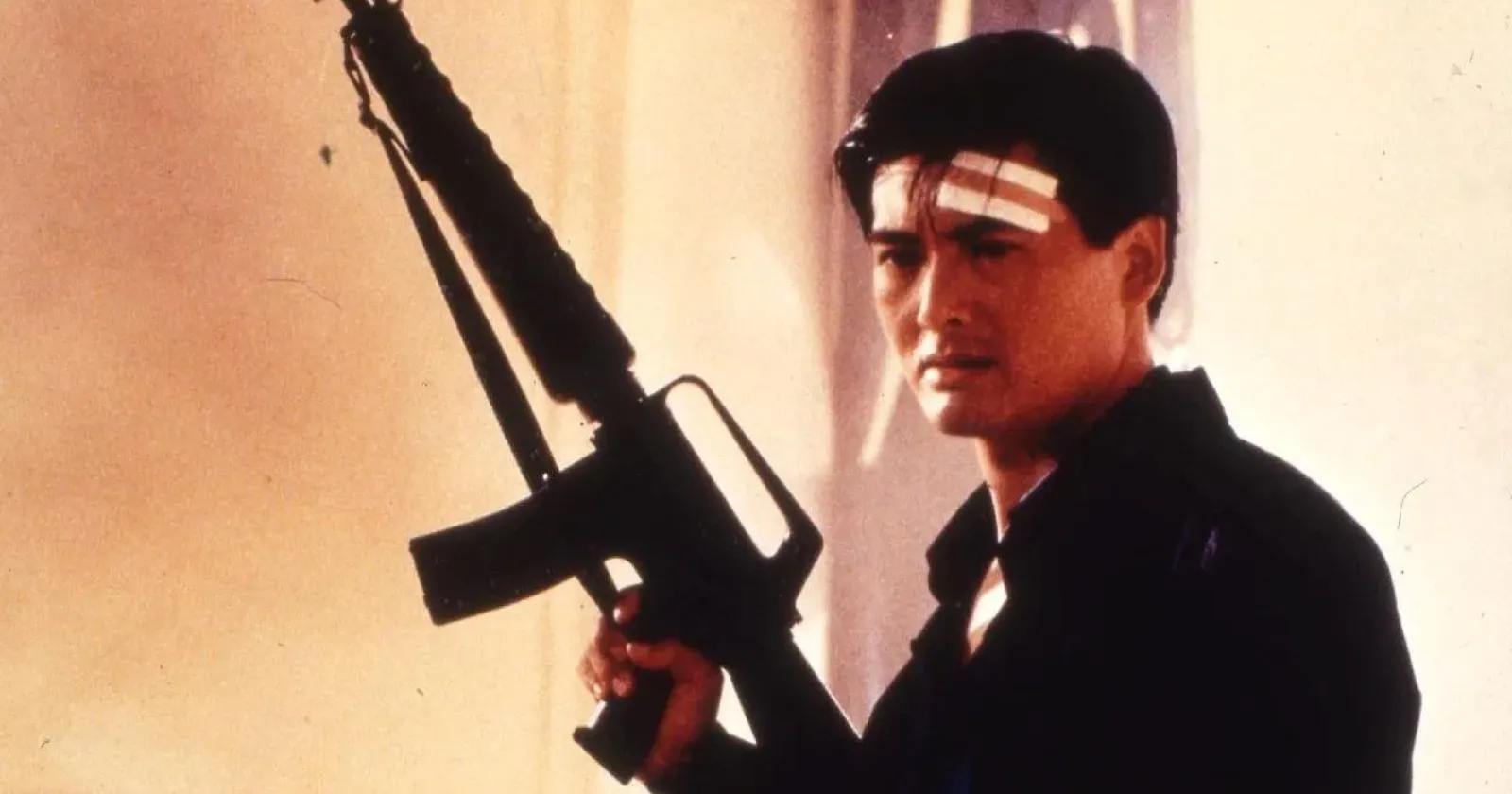
It is immediately obvious that A Better Tomorrow III: Love and Death in Saigon is a different beast than the first two films. That is not a knock. It is just that there are clear signs that Tsui Hark is in the director’s chair this time, bringing his own rhythms and priorities to a franchise that, up to this point, was defined by John Woo’s balletic gun-fu swagger. The split is baked into the movie’s existence. Tsui Hark produced A Better Tomorrow and A Better Tomorrow II, then stepped in to make a prequel that both reconnects with Chow Yun-fat’s Mark and also drifts away from what made the first two entries feel like John Woo joint mythology.
That tension actually becomes part of the fun, because Tsui Hark is less interested in simply recreating the Woo template than he is in giving Mark a real, consequential backstory. This is the rare prequel that at least understands how to justify its own existence. Mark Lee (Chow Yun-fat) is not just reintroduced for iconography. He is put in motion as a man learning, in real time, what it means to survive a world where loyalty and love get weaponized, then punished.
The film is set in 1974 during the final days of the Vietnam War, with Mark arriving in Saigon to bring his uncle and his cousin Michael (Tony Leung Ka-fai) back to Hong Kong. From the jump, Tsui Hark frames Saigon as an unstable pressure cooker of corruption, opportunism, and shifting power. Mark gets swallowed into that ecosystem almost instantly, and the movie’s tone starts to separate itself from Woo’s romanticized criminal brotherhood. This one is messier in a human way, not just in an action-montage way.
The pivot point is Anita Mui’s Chow Ying-kit, a gunrunner with real influence and a guarded tenderness that never reads as soft. Kit is the film’s secret engine, because she is both the gateway into the criminal world and the character constantly poking at Mark’s emotional limits. Tsui Hark makes the love triangle feel less like melodramatic posturing and more like a slow tightening vice. Mark, Michael, and Kit become a triangle of misunderstandings and half-truths, and the movie smartly uses that conundrum as the building blocks of future ruin.
This is where I think the movie works best. Chow Yun-fat is still impossibly cool, but Tsui Hark uses that coolness as armor instead of as a superpower. Mark’s restraint, his refusal to say what he wants until it is too late, is the kind of character shaping that makes the Mark of A Better Tomorrow make more sense. Tony Leung Ka-fai goes toe-to-toe with Chow in a way the franchise needed, playing Michael as capable and increasingly tragic, a man who wants to believe in the best version of the story even as the story keeps proving otherwise. Anita Mui, meanwhile, gives Kit a kind of mythic romantic fatalism. Kit feels simultaneously like a love interest and an independent force.
Action-wise, Tsui Hark does not stage shootouts the way John Woo does. The violence here is still plentiful, but it is less “dance” and more “escape.” Less cathedral opera, more battlefield panic. That shift will disappoint anyone coming here specifically for the heightened slow-motion Woo poetry that later peaks in The Killer and Hard Boiled. But I also think the change is necessary to avoid feeling like business as usual. A Better Tomorrow III: Love and Death in Saigon is trying to make the myth feel bruised, not heavenly.
Where I do bump up against it is the broader franchise connective tissue. The “prequel” label can feel like an excuse to force significance onto events that would arguably play just as well, or better, if the movie stood alone as its own Hong Kong action melodrama set against the Vietnam War. Mark’s iconic look landing late in the film is a great moment, because it is earned here, but it also highlights the larger issue: sometimes the movie seems more interested in proving it belongs to the franchise than letting its own story breathe. The best is when it feels completely new and disassociated.
Still, there is more thematic density here than the trilogy is usually given credit for. Tsui Hark’s approach stretches the emotional consequences across the entire runtime instead of saving everything for one extended third-act crescendo. The supporting ensemble helps too, most notably Shih Kien as Michael’s father, whose presence adds a generational weight that makes the losses sting more.
READ MORE MOVIE REVIEWS: The ‘Burbs, Heathers, Star Trek V: The Final Frontier
At the end of the day, I like this entry for what it is. It is not the pure John Woo adrenaline high of the first two, but it’s not trying to be. It’s Tsui Hark re-centering the saga on the character everyone latched onto, then sanding away the legend until you can see the scars underneath. As a piece of franchise architecture, it is a fascinating detour. As a film, it has enough emotion, style, and tragedy to justify itself, even if I still wonder how much stronger it could have been if it was freed from the obligation of being A Better Tomorrow canon.
Score: 7/10
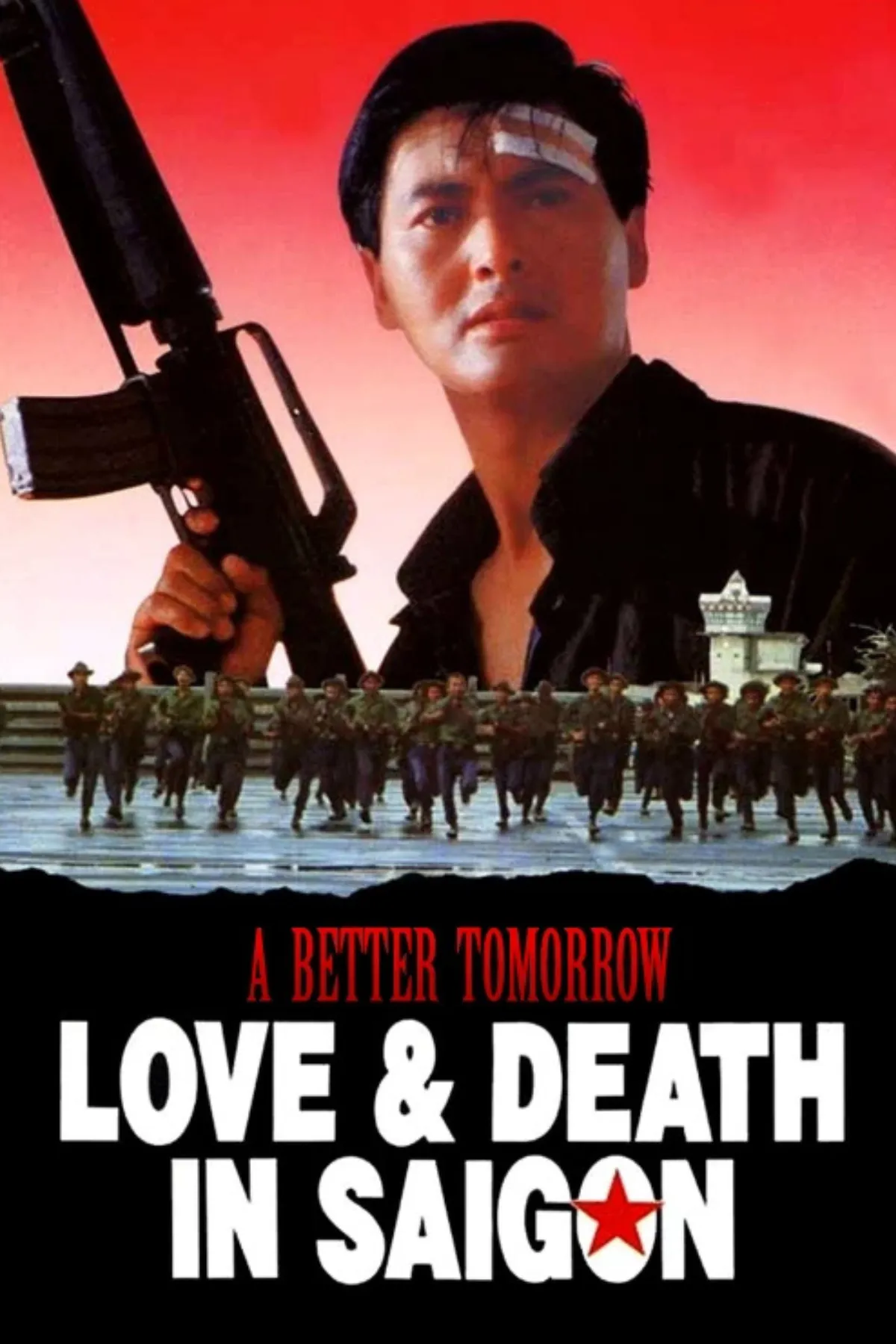
A Better Tomorrow III: Love and Death in Saigon (1989)
- Cast: Chow Yun-fat, Anita Mui, Tony Leung Ka-fai, Saburo Tokito, Sek Kin
- Director: Tsui Hark
- Genre: Action, Crime, Drama
- Runtime: 118 minutes
- Rated: R
- Release Date: September 9, 1989
- Movies Like A Better Tomorrow III: Love and Death in Saigon: Blackhat, Last Hurrah for Chivalry, Polite Society
- Follow us on Letterboxd