There’s real ache to Hlynur Pálmason’s The Love That Remains, a divorce movie that almost refuses to behave like one. It’s less interested in the usual big cathartic blowups and courtroom beats than it is in the day-to-day weirdness of a family trying to reconfigure itself after the center can’t hold anymore.
Anna (Saga Garðarsdóttir) and Maggi (Sverrir Gudnason) are separated, still orbiting each other in a small Icelandic world that feels both vast and claustrophobic. She’s a visual artist, chasing something intangible on blank canvases. He’s out on the fishing boat and out of the house, a presence that still hangs in the rooms even when he’s not there. Their three kids are caught in the middle, not in a melodramatic way, but in the more realistic way where routines shift, rules change, and everyone pretends the air hasn’t been sucked out of the place.
That’s the thing about The Love That Remains. It plays like a string of vignettes, scenes that don’t always “advance” anything so much as deepen the lived-in texture. You watch the family negotiate small logistics and larger emotional landmines. You can feel the history in the house, in the way Anna and Maggi can still snap into old rhythms for a moment, then recoil just as quickly. Their connection flickers like a bad signal: a shared glance, a night that feels almost normal again, then the reminder of why it isn’t.
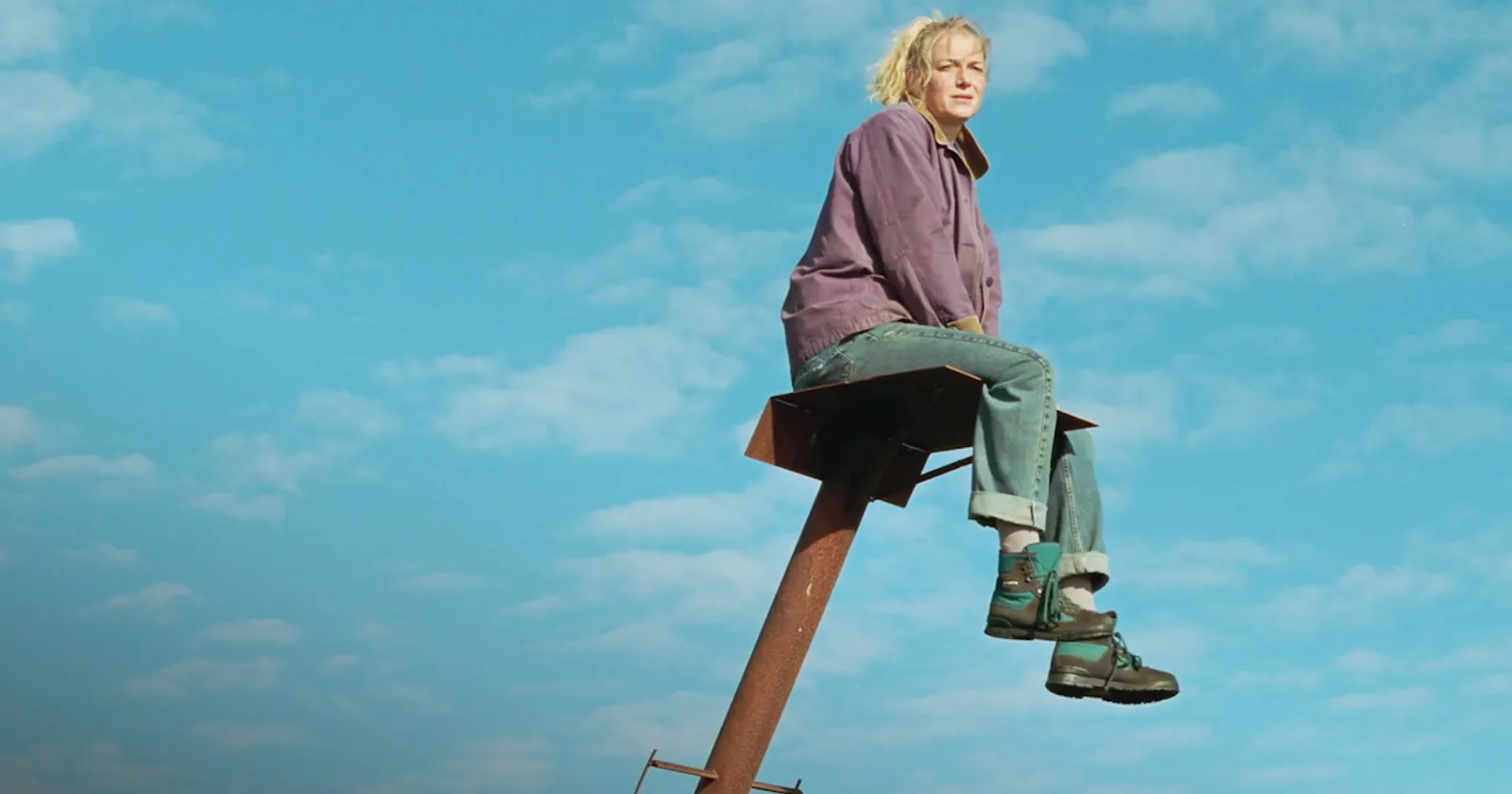
Pálmason, coming off the critical bruiser that was Godland, is working in a much gentler register here, at least on the surface. The camera hangs back and lets these moments breathe, often framing the family against landscapes that make them look tiny. It’s beautiful in a way that doesn’t feel like postcard tourism. It feels isolating, like the world is too big for their problems, and also like their problems are the only thing in the world.
Where the film really started to click for me was in how it lets surrealism seep in without warning. It’s still “about” divorce, sure, but it’s also about the strange subconscious violence that bubbles up when people are trying to be civil while quietly unraveling. The tonal left turns are the most memorable material here, and they’re the moments that keep pulling me back toward Pálmason as a filmmaker even when the narrative feels purposely loose. There’s an off-kilter humor to some of it, too, which helps cut through the melancholy instead of drowning in it.
Garðarsdóttir and Gudnason do a lot with very little on paper. Their performances aren’t built around speeches or “acting moments.” They’re built around fatigue, muscle memory, and the way love can curdle into resentment while still remaining, annoyingly, love. The kids feel like actual kids, not screenwriter-designed miniature adults, and that authenticity makes the domestic scenes land harder, even when the film is just hanging out.
Still, I’m not fully convinced the whole thing coheres into one clean statement. That may certainly be the point, and I can respect it. Life after a split is not clean. But there are stretches where the shapelessness reads less like drift and more like a film that’s content to live in mood without always earning the runtime. When it locks into its stranger imagery late, it becomes far more singular than it is up front.
READ MORE MOVIE REVIEWS: Sirāt, Good Luck, Have Fun, Don’t Die, A Poet
I kept thinking about Joachim Trier, especially The Worst Person in the World, not because these movies are the same, but because both filmmakers understand how time passes in tiny, defining increments. I also thought about how Yi Yi captures family as a moving organism, always shifting, always absorbing damage. The Love That Remains doesn’t devastate the way those films can, but it finds a bruised tenderness in its best passages that’s hard to shake.
Pálmason shoots the hell out of the film. Yet it’s a film I admire scene-to-scene more than I love as a complete experience. But even when it’s frustratingly elusive, it’s the kind of elusive that still feels achingly human.
Score: 6/10
The Life That Remains (2026)
- Cast: Saga Garðarsdóttir, Sverrir Gudnason, Ída Mekkín Hlynsdóttir, Þorgils Hlynsson, Grímur Hlynsson
- Director: Hlynur Pálmason
- Genre: Comedy, Drama
- Runtime: 109 minutes
- Rated: NR
- Release Date: January 30, 2026
- Movies Like The Love That Remains: Sentimental Value, Aftersun, Train Dreams
- Follow us on Letterboxd