Joachim Trier has earned enough goodwill at this point that even his “minor” films arrive with a sort of built-in reverence, especially after The Worst Person in the World became such an instant modern staple. Sentimental Value is a very different kind of Trier movie: less messy, less slippery, more refined, and more self-conscious about its own prestige. I liked it more the second time around, mostly because the first viewing had me fighting the weight of its reputation. It premiered in competition at Cannes with a lot of immediate hype swirling around it, and you can feel that aura baked into the framing.
The story follows sisters Nora Borg (Renate Reinsve) and Agnes Borg Pettersen (Inga Ibsdotter Lilleaas) as they reunite with their estranged father Gustav Borg (Stellan Skarsgård) after the death of their mother. Gustav is a celebrated film director who has been absent enough, and emotionally clumsy enough, that his reappearance feels like an intrusion more than comfort. He also wants the family house back in his orbit, which turns grief into logistics and resentment into a daily routine.
Gustav’s attempted path to reconciliation is, of course, the most Gustav path imaginable: he offers Nora the lead role in his comeback film, a project inspired by his own mother Karin and her suicide. Nora refuses, and Gustav pivots by hiring a rising American star, Rachel Kemp (Elle Fanning), whose presence brings financing and attention, but also deepens the emotional bruise. The family tension becomes inseparable from the filmmaking process itself, and Trier, co-writing again with Eskil Vogt, turns that into a metatext about art as confession, and art as avoidance.
This is where Sentimental Value both works and starts to grate on me. Trier directs the hell out of it, sometimes to the point that it feels slightly over-directed, like every scene is carefully designed to land as a Meaningful Moment. The movie is undeniably well-made, and Trier remains almost incapable of making something that’s flat-out bad. But the emotional beats can feel cloying, in the specific way that prestige family dramas about artists and their wounds often do. It is a film about filmmaking, about legacy, about generational trauma, about the stories we tell to justify the ways we failed the people closest to us, and it wants you to understand all of that loudly.
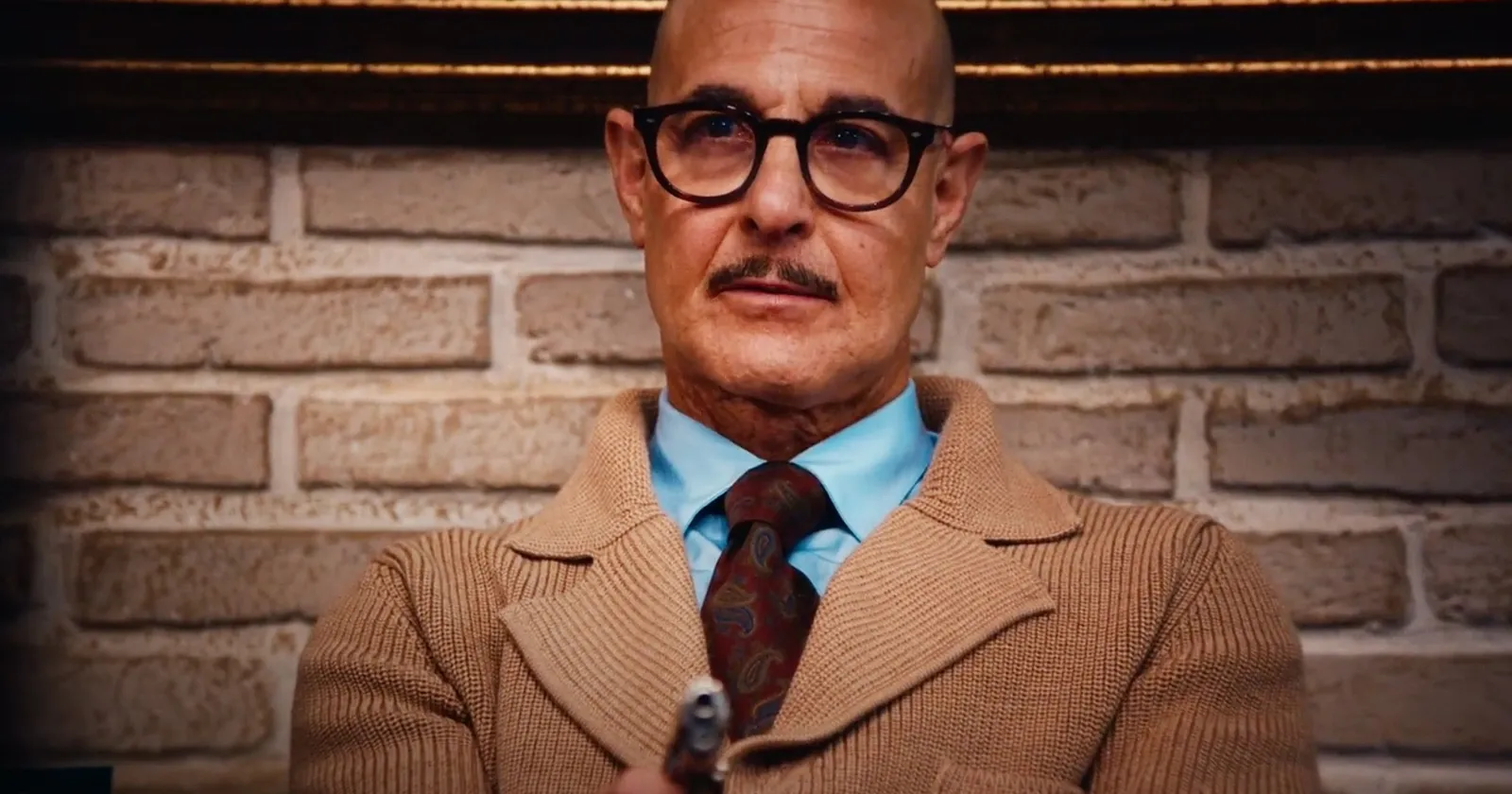
The performances are the reason I stayed with it, even when the story felt like it was reaching for the gold-plated version of itself. Stellan Skarsgård is predictably excellent as Gustav, a man whose self-mythology is so entrenched that even his apologies feel like auditions. Inga Ibsdotter Lilleaas is the emotional anchor. Agnes reads as the sibling who learned how to survive by translating pain into competence, into caretaking, into patience, until that patience snaps in small, devastating ways. Elle Fanning, on second viewing especially, really clicked for me. Rachel Kemp could have been written as an obvious “outsider disruptor,” but Fanning plays her as someone perceptive enough to realize she’s being used as both muse and weapon, and insecure enough to still try to make it work anyway.
Renate Reinsve is the tricky one for me. I think she’s very good, and Nora’s arc is compelling on paper (an actress with stage fright, stuck in an identity shaped partly by her father’s neglect and her own inability to metabolize rage). But Reinsve’s lightning-in-a-bottle collaboration with Trier in The Worst Person in the World is such a high-water mark that this feels, by comparison, a bit more muted and mannered. That might be intentional, since Nora is written as someone who shuts down rather than explodes, but I still found myself more taken by Lilleaas and Fanning.
There are also smaller threads that add texture, even when the movie feels like it’s smoothing itself into Oscar-season shape. Anders Danielsen Lie shows up as Jakob, Nora’s theater colleague and romantic interest, and he brings a familiar Trier-universe specificity, that casual intimacy that can curdle into something sadder without warning. And the film’s central tension, the idea that Gustav can show more empathy toward an actress he just met than toward his own daughters, is both effective and infuriating in a way that feels true to life.
READ MORE MOVIE REVIEWS: The Running Man, Song Sung Blue, Avatar: Fire and Ash
I keep circling back to the same push and pull: Sentimental Value is impressive, but it can feel a little too highfalutin for its own good. The craft is there. The acting is there. The emotions are there. But some of the rougher, more spontaneous magic that makes Trier’s best work feel alive is replaced by something more carefully arranged, more obviously engineered to be “important.” I still think it’s worth seeing, and I wouldn’t be surprised if it grows on me further over time, especially since Trier’s movies tend to reward revisits. It’s just not the knockout I expected from the initial wave of acclaim, and a bit of the inverse of what worked so well for me in The Worst Person in the World.
Score: 6/10
Sentimental Value (2025)
- Cast: Renate Reinsve, Stellan Skarsgård, Inga Ibsdotter Lilleaas, Elle Fanning, Anders Danielsen Lie, Cory Michael Smith
- Director: Joachim Trier
- Genre: Drama
- Runtime: 133 minutes
- Rated: R
- Release Date: November 21, 2025
- Movies Like Sentimental Value: Train Dreams, Aftersun, Nebraska, More Movies Like Sentimental Value
- Follow us on Letterboxd