Once a Thief is such an odd movie to drop right in the middle of John Woo’s run because it almost feels like the director responsible for A Better Tomorrow, The Killer, Bullet in the Head, and then soon after Hard Boiled woke up and decided he wanted to make something goofier, more romantic, and a whole lot less interested in the tragic guy-with-a-gun melodrama mode that made him one of the coolest directors alive in the first place.
And I don’t even mean that as some immediate knock against it, because in theory, I kind of like the idea of Woo loosening the tie a bit. Once a Thief is lighter on its feet, less operatic, less consumed with gang codes and brotherhood and men bleeding out while staring longingly at each other from across a church or a warehouse or whatever beautifully doomed space Woo has trapped them in this time. It’s more or less about three orphans who grew up together, became art thieves under the tutelage of an infamous crime boss who also doubles as their father figure, and then get wrapped up in a romantic caper involving a cursed French painting. That’s not nothing. There’s a movie in there. Maybe even a really fun one.
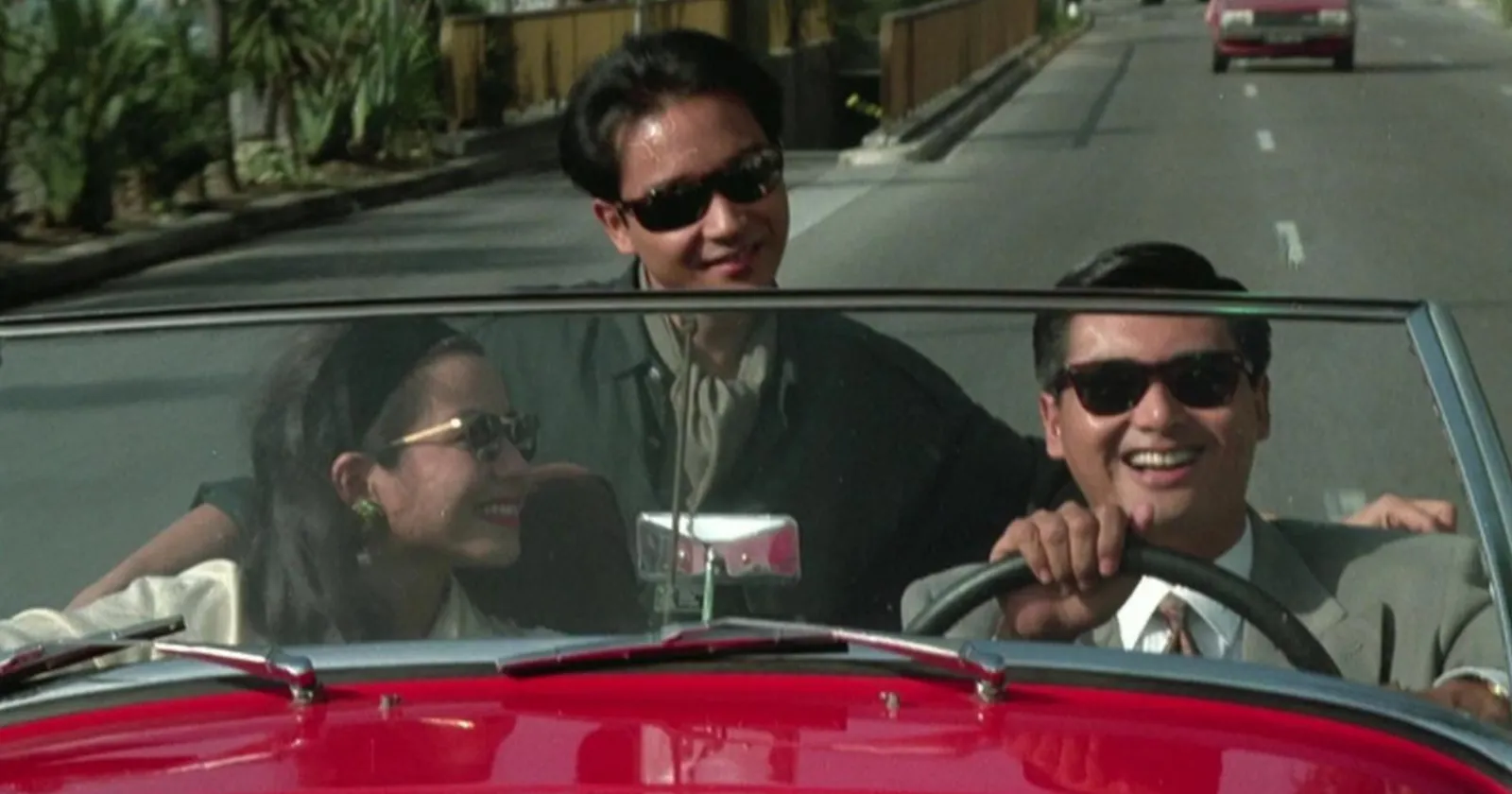
The trio at the center helps. Leslie Cheung plays James, Chow Yun-fat plays Joey (aka Red Bean Pudding), and Cherie Chung plays Cherie (aka Red Bean), and the movie sort of orbits around the fact that the two boys are secretly in love with the same woman while still trying to operate like a finely tuned criminal unit. That’s good fuel for a movie like this, especially one from Woo, because even when he’s not making outright love triangles, so much of his work is already about desire, loyalty, jealousy, and the emotional knots men tie themselves into when they can’t quite say what they mean.
But man, I don’t think the tone works. Or maybe better put, I don’t think Woo ever really pins the tone down enough to even figure out his own intentions. The movie is oddly, aggressively comedic. Not just breezy or playful, but full-on slapstick in stretches, and it keeps asking Chow Yun-fat especially to bend himself into this bigger, goofier mode that just doesn’t come naturally to him. He’s obviously still got movie star gravity because it’s Chow Yun-fat and that basically never goes away, but he’s trying so hard to match the film’s energy that it starts to feel like he’s pressing. It’s not the sly, impossibly cool presence he has in A Better Tomorrow or The Killer. It’s not even the locked-in swagger he’d bring right back in Hard Boiled. It’s something broader, more exaggerated, and I just don’t think it fits him well at all.
Which is maybe the whole problem with Once a Thief. It’s John Woo at a different register than what I typically want from John Woo, and I’m not sure that register suits his sensibilities all that well. Or at least it doesn’t utilize what he’s so great at nearly enough. Because every now and then you’ll get a glimpse of it. A bit of motion here, a seaside action beat there, some romantic tension, some blocking that reminds you who’s behind the camera. And then the movie swerves back into comedy that feels a too silly and distracting.
You can absolutely see some early Mission: Impossible 2 DNA in here, which makes sense given where Woo would eventually go. The romantic caper stuff, the glamorous settings, the thief iconography, the sun-soaked action, all of it feels like an early sketch for some of the things he’d keep playing with later on. And I actually found that part kind of fascinating just as a point on the Woo timeline. But fascination and enjoyment aren’t always the same thing, and I kept waiting for the movie to become stickier.
It also just has the misfortune of existing in maybe the worst possible spot in his filmography to be merely okay. If this came from some anonymous journeyman action director, maybe I’d be a little more forgiving of it as a charming offshoot. But it’s sitting there in the middle of one of the great auteur action runs ever assembled, so it either gets removed from the conversation entirely or sticks out like a sore thumb. It feels minor in a stretch of films that all feel major.
READ MORE MOVIE REVIEWS: Miller’s Crossing, Wild at Heart, Light Sleeper
That said, I don’t think it’s a disaster or anything. I get why some people have a soft spot for it. It’s colorful, it’s pleasant enough, and there’s novelty in seeing Woo chase something this openly mischievous. Leslie Cheung and Cherie Chung help keep it afloat, Kenneth Tsang does solid work as the father figure crime boss, and there’s enough charm in the premise that I never totally checked out. I just kept thinking about how much better this could’ve been if Woo had pinned down the tone a bit more or let himself lean harder into either the romance or the action instead of constantly trying to split the difference with slapstick.
Score: 5/10
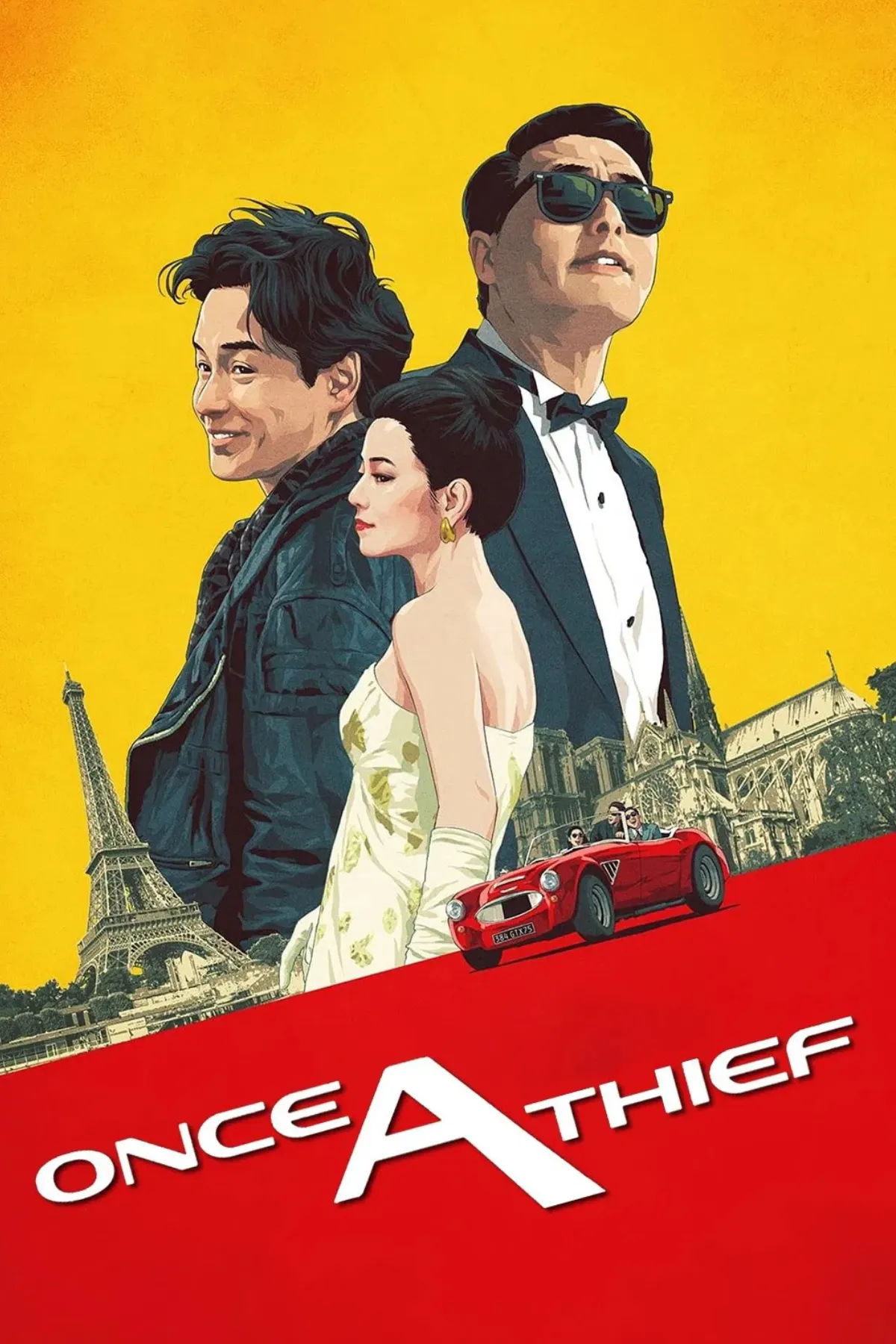
Once a Thief (1991)
- Cast: Chow Yun-Fat, Leslie Cheung, Cherie Chung Cho-Hung, Paul Chu Kong, Kenneth Tsang
- Director: John Woo
- Genre: Action, Comedy, Crime, Thriller
- Runtime: 108 minutes
- Rated: R
- Release Date: February 2, 1991
- Movies Like Once a Thief: Play Dirty, The Fall Guy, Wolfs
- Follow us on Letterboxd