Some movies just have it. Some movies just have the juice. It is hard to quantify, but you know it when you see it. The Killer is that kind of lightning-in-a-bottle movie, and it feels like the moment John Woo fully crystallizes every motif he had been building toward across the 1980s. If A Better Tomorrow is the spark and A Better Tomorrow II is the messy explosion, The Killer is the operatic synthesis. A film that could only be made by John Woo, at the peak of his powers, with the kind of confidence that turns an action picture into an instant template other filmmakers will spend decades borrowing from.
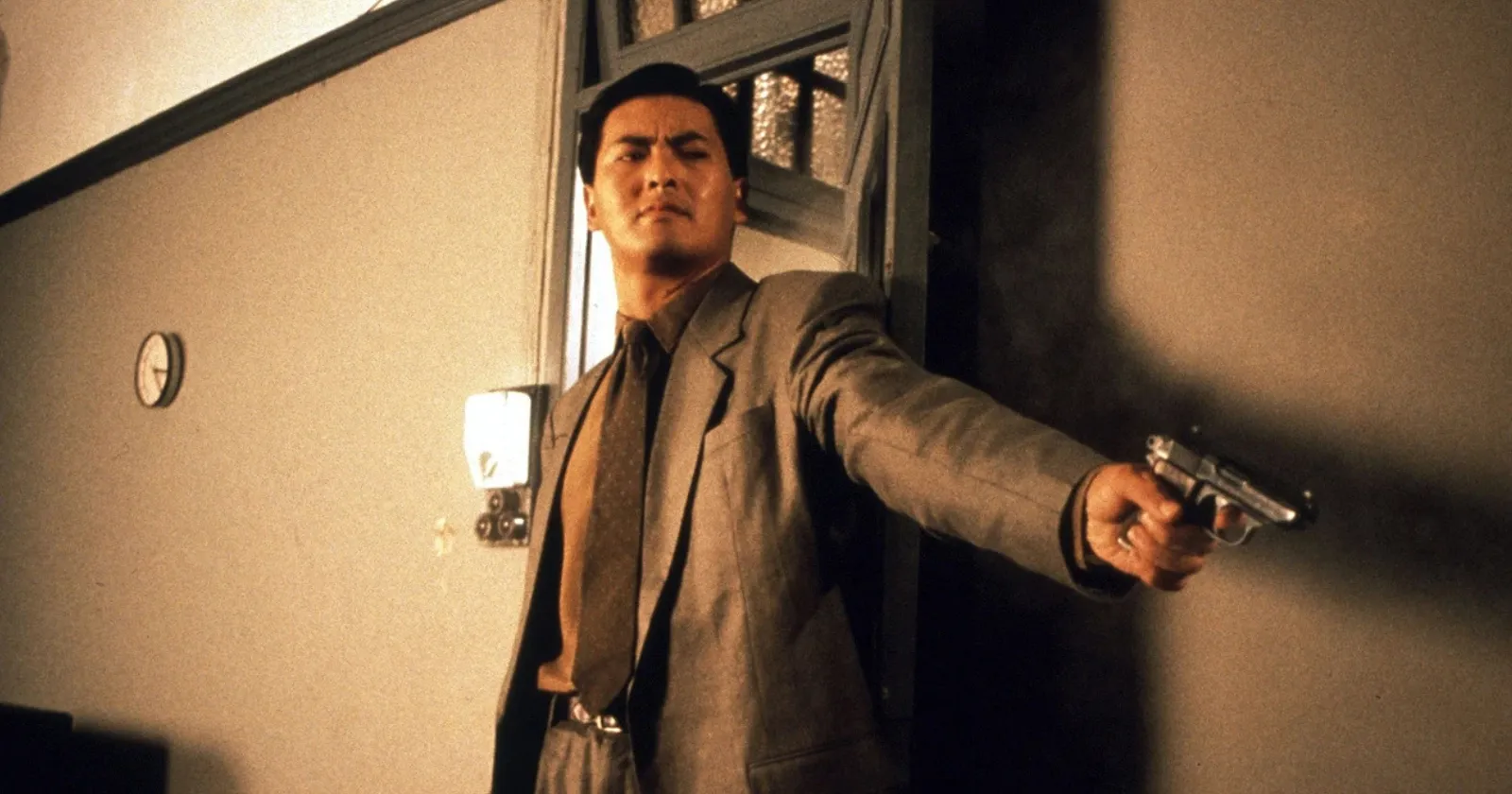
Woo re-teams with Chow Yun-fat and gives him one of the great movie star showcases in Hong Kong cinema. Chow plays Ah Jong, a contract killer with a personal moral code, and the movie is smart enough to treat that contradiction seriously. Ah Jong is undeniably violent, undeniably complicit in a rotten world, and yet he carries remorse in a way that makes the genre mechanics feel tragic instead of just slick. That remorse lands immediately when a hit goes wrong and he accidentally blinds an innocent bystander, Jennie (Sally Yeh), a singer whose life is derailed in an instant because of the collateral damage Ah Jong pretends he can avoid.
That one act of unintended harm gives The Killer its emotional engine. Ah Jong becomes fixated on paying for Jennie’s treatment, taking one final job in the hope that it buys him an exit from the triad ecosystem. Of course, the movie understands what Woo always understands about these worlds. There is no clean exit. The moment you decide you want out, you become useful as a pawn or disposable as a liability. Double-crossings and shifting allegiances are not twists here, they are gravity.
What elevates the film from great to special is how Woo builds it around empathy and relationship rather than pure plot. The central dynamic is the uneasy bond between Ah Jong and Detective Li Ying (Danny Lee), a cop who should be the clean moral counterweight but instead becomes fascinated by Ah Jong’s principles. Danny Lee plays Li Ying with a kind of stubborn intensity that never turns cartoonish. He is relentless, but not hollow. He sees the humanity in the person he is supposed to hate, and that discomfort becomes the movie’s pulse.
That testy, increasingly cordial friendship is where Woo’s romanticism really hits. The Killer is a two-hander bromance disguised as a crime thriller, and the best stretches are the ones where the film pauses just long enough to let these two men clock one another’s souls. They do not become sentimental. They become intertwined. When the bullets start flying and the movie turns into “two guys versus endless waves of cronies,” it works because you actually feel the strange trust they have built, even as the world around them keeps insisting that trust is a weakness.
Visually, this is John Woo opening the canvas wider than ever. The framing is immaculate, the classical score gives everything a kind of tragic grandeur, and Woo’s fast-slow-fast action rhythm is pure craft. The shootouts are not just chaos. They are staged like set pieces with musical structure. Tension, release, silence, then a new crescendo. You can feel Woo’s obsession with motion, with bodies moving through space, with the moment a character commits to action and cannot take it back.
And this is also where Woo’s iconography goes full myth. The church imagery matters. The inherited tranquility of those spaces, the way the film uses calm to make violence feel even more profane, gives The Killer a spiritual ache that most action films never even attempt. This is also Woo’s first major entry where doves become a recurring symbol of peace, floating through environments where peace is impossible. It is not subtle, but it is sincere, and Woo’s sincerity is why it works. He is not winking at you. He is reaching for something operatic.
The supporting cast helps keep the emotion grounded. Sally Yeh brings real warmth and vulnerability as Jennie, and Kenneth Tsang adds a steady presence as part of the police side of the story. The result is a film where the melodrama never feels like empty posturing. It feels like the reason the action exists in the first place.
READ MORE MOVIE REVIEWS: The ‘Burbs, Heathers, Star Trek V: The Final Frontier
More than anything, The Killer plays like an artist’s magnus opus. A pioneer of international action filmmaking taking everything he does best and delivering the best version of it, while also proving Chow Yun-fat is not just effortlessly cool. He is a dramatic actor with real gravitas and charisma, a leading man who can carry regret as convincingly as he carries a gun.
John Woo would go even bigger later with Hard Boiled, and there are arguments to be made about which one is “best.” But The Killer has that rare mix of elegance and heartbreak that makes it feel untouchable. A stone-cold classic, and one of the most influential action movies ever made.
Score: 9/10
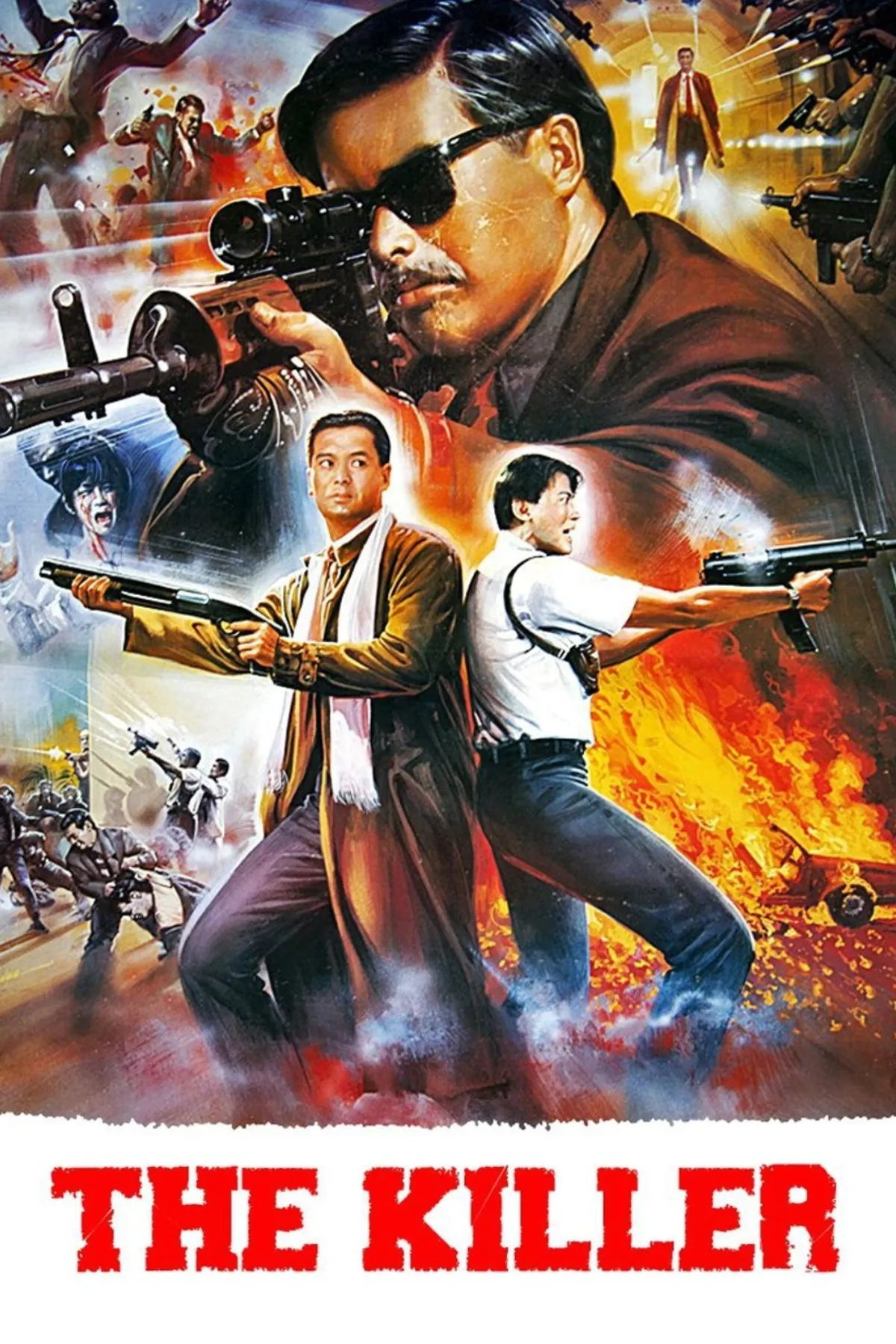
The Killer (1989)
- Cast: Chow Yun-Fat, Danny Lee Sau-Yin, Sally Yeh, Paul Chu Kong, Kenneth Tsang, Shing Fui-On, Tommy Wong
- Director: John Woo
- Genre: Action, Crime, Drama, Thriller
- Runtime: 110 minutes
- Rated: R
- Release Date: July 6, 1989
- Movies Like The Killer: A Better Tomorrow, Ballerina, Mission: Impossible II
- Follow us on Letterboxd