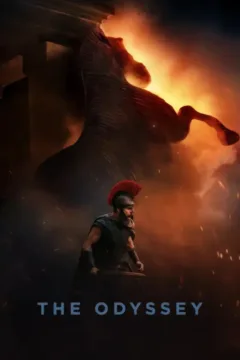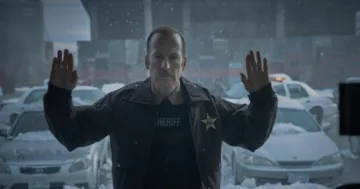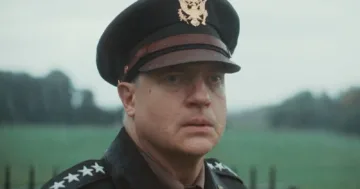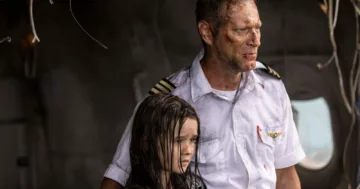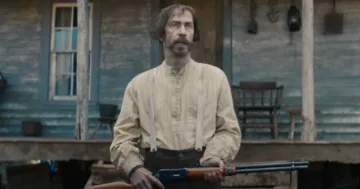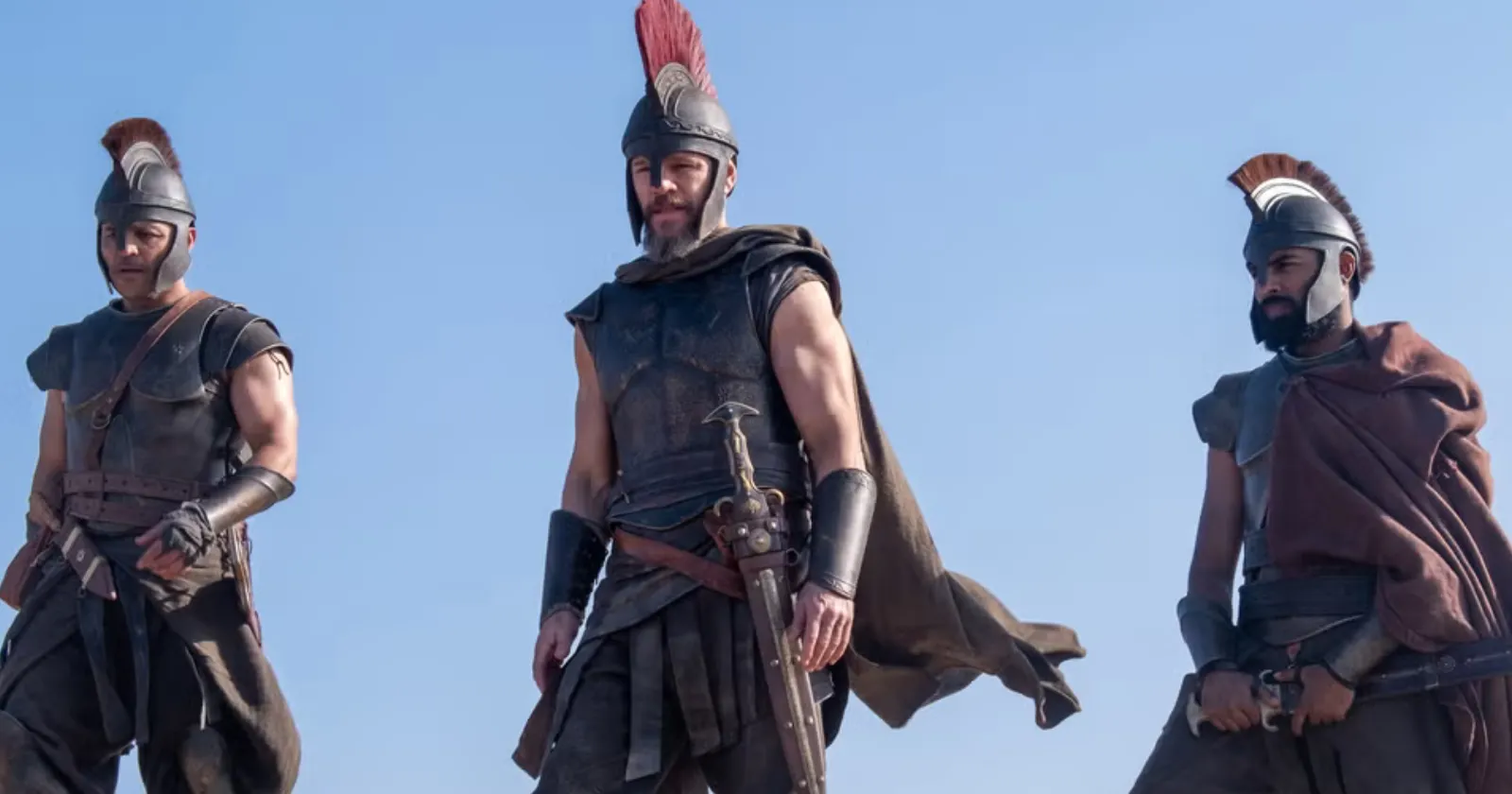

Christopher Nolan’s The Odyssey. There are certain movies that feel almost titanic as they happen. It was only a matter of time before someone adapted The Odyssey on a grand scale. And after Dunkirk further proved Nolan’s mastery of large-scale historical filmmaking, and Oppenheimer cemented him as arguably the most important blockbuster filmmaker working today, Homer’s epic felt like the biggest fish left in the pond.
Faithfully adapting one of the foundational works of Western literature is certainly no small task. The Odyssey follows Odysseus’ decade-long journey home following the Trojan War, encountering cyclopes, sirens, witches, gods, monsters, and countless other obstacles while his wife Penelope and son Telemachus desperately cling to the hope that he’ll one day return to Ithaca. It’s an enormous story, one that’s been interpreted countless times in one form or another, but I have a hard time imagining we’ll see a more comprehensive, faithful, or technically accomplished version anytime soon.
The biggest reason it works is that Nolan never loses sight of the people underneath the mythology. Matt Damon gives one of the very best performances of his career as Odysseus, balancing the legendary warrior with a man who’s been physically and emotionally exhausted by decades of war and the impossible journey that follows it. Odysseus remains a brilliant tactician, but Nolan is just as interested in the toll those decisions have taken on him as he is in the spectacle surrounding them, while Damon perfectly plays the weathered man swaying between losing and clinging onto hope he’ll someday return home.
Tom Holland is similarly impressive as Telemachus, and this honestly feels like the role he needs outside of the Marvel machine. He finally has material with real dramatic weight absent of the franchise angle, and he absolutely rises to the occasion. The relationship between father and son and the legacies passed down become one of the emotional anchors of the film, making their eventual reunion land with exactly the impact it should.
Robert Pattinson, meanwhile, feels like he was born to play Antinous. Every scene he’s in carries this sinister confidence that’s somehow both charismatic and deeply unsettling. He’s conniving, manipulative, and endlessly entertaining to watch. Anne Hathaway delivers one of the stronger female performances in Nolan’s entire filmography as Penelope, a character given far more agency and emotional complexity than many of the director’s previous women have received. Considering that’s been one of the more consistent criticisms of Nolan’s work over the years, it’s at least encouraging to see him honor a few tentpole characters in Homer’s poem.
What continues to amaze me, though, is just how effortlessly Nolan’s core creative team keeps raising the bar. Ludwig Göransson’s score, Jennifer Lame’s editing, Hoyte van Hoytema’s cinematography, and Nolan’s direction have developed into one of the strongest creative partnerships working today, from Tenet to Oppenheimer to, now, The Odyssey. I honestly struggle to think of another filmmaker whose collaborators feel this perfectly in sync with one another. Every department is operating at an absurdly high level, resulting in a film that somehow makes incredibly dense source material feel remarkably approachable for much of its runtime.
It also looks absolutely stunning. Shooting on location and relying on practical filmmaking wherever possible gives The Odyssey a texture that so many modern blockbusters simply lack. Maybe I’m cherry-picking a little, but I still can’t wrap my head around the fact that this reportedly cost nearly $75 million less than something like The Electric State, and that according to Nolan, it even came in under budget. Even when Nolan stages massive action sequences, the film never feels wasteful. In fact, outside of those spectacular moments, The Odyssey is surprisingly dialogue-driven. It’s closer to a chamber piece than I expected, built around conversations, strategy, and the emotional consequences of war rather than nonstop spectacle.
That doesn’t mean the spectacle isn’t there when it arrives. The Trojan War is appropriately overwhelming, the sequences at sea are brutal and unforgiving, and Nolan somehow turns the Cyclops encounter into the closest thing he’s ever made to outright horror. I’d honestly love to see him explore that genre more directly someday because those scenes are some of the film’s most effective. Then comes the third act, which brings everything crashing together in spectacular fashion and delivers some of the most thrilling action Nolan has ever directed.
If there’s one thing I’ve learned over the last decade, it’s that Christopher Nolan knows how to film boats. Denis Villeneuve has spaceships. Nolan has ships crossing impossible seas, and every sequence aboard them feels tactile, dangerous, and alive.
The supporting cast is equally stacked, even if many actors only appear for a handful of scenes. Himesh Patel is excellent as Eurylochus, serving as Odysseus’ level-headed second-in-command. Mia Goth feels perfectly cast as the treacherous Melantho, Jon Bernthal chews every bit of scenery available to him as Menelaus, John Leguizamo brings real warmth to Eumaeus, and Corey Hawkins has a lot of fun playing Antinous’ gloriously incompetent right-hand man. The list goes on and on with household names, and it’s a testament to the casting that even relatively small roles leave lasting impressions and that Christopher Nolan can get starry performers to sign on for even the smallest roles.
The film also finds contemporary relevance without ever feeling like it’s forcing the issue. Beneath all the mythology and spectacle is a story about the lingering damage of endless war, about societies that slowly replace compassion with greed, and about how easily people lose faith when conflict becomes their defining reality. The treatment of Ithaca’s beggars by Penelope’s suitors feels depressingly recognizable, despite Homer’s text being written well over two thousand years ago. Nolan has always been interested in humanity struggling against impossible systems, but this feels closer to Dunkirk than something like Oppenheimer. For all of its darkness, there’s a surprising amount of hope running through the film.
My biggest criticism is that the second act occasionally struggles to maintain the momentum established early on and that it gets a bit long in the tooth. Nolan wisely keeps the runtime under three hours, but it’s such an enormous undertaking that it still feels every bit as massive as its reputation suggests. Once the film moves beyond many of its largest set pieces and settles into episodes involving Circe and Odysseus confronting the ghosts of his fallen crew, it loses a little steam before finding its footing again. Those sequences are by no means bad, but they’re noticeably less propulsive than what surrounds them.
Despite so many great supporting performances, a handful of small roles still felt slightly underserved. Benny Safdie was probably my biggest disappointment, largely because I find him riveting in just about everything he does, and might’ve even voted for him best supporting in Oppenheimer. As Agamemnon, he’s simply not given enough opportunity to make much of an impression. Which is fine, as the film doesn’t have too much interest in the politics of Greece, but it’s a character you can see Nolan struggling to shoehorn in in real time. Charlize Theron’s Calypso functions more as a narrative device than a fully realized character, while Zendaya’s Athena will almost certainly leave some viewers wishing she’d been used more. That said, her late scene with Odysseus surrounding the Trojan War is among my favorite moments in any film this year, so it’s difficult to complain too much when she makes that much of her limited screentime.
READ MORE MOVIE REVIEWS: You, Me & Tuscany, They Will Kill You, Ready or Not 2: Here I Come
Grading this outside of the inevitable “Nolan curve,” The Odyssey is an overwhelming success and one of the great epics of the 21st century. It’s massive without becoming hollow, technically astonishing without feeling sterile, and remarkably faithful to one of the most influential stories ever written while still finding room for genuine humanity between its colossal set pieces. Following Dunkirk, Tenet, Oppenheimer, and now The Odyssey, Nolan has assembled a run that few contemporary filmmakers can realistically match. Most directors would consider a film like this the crowning achievement of their career. For Christopher Nolan, it somehow feels like another chapter in one of the greatest streaks modern blockbuster filmmaking has ever seen.
Score: 8/10
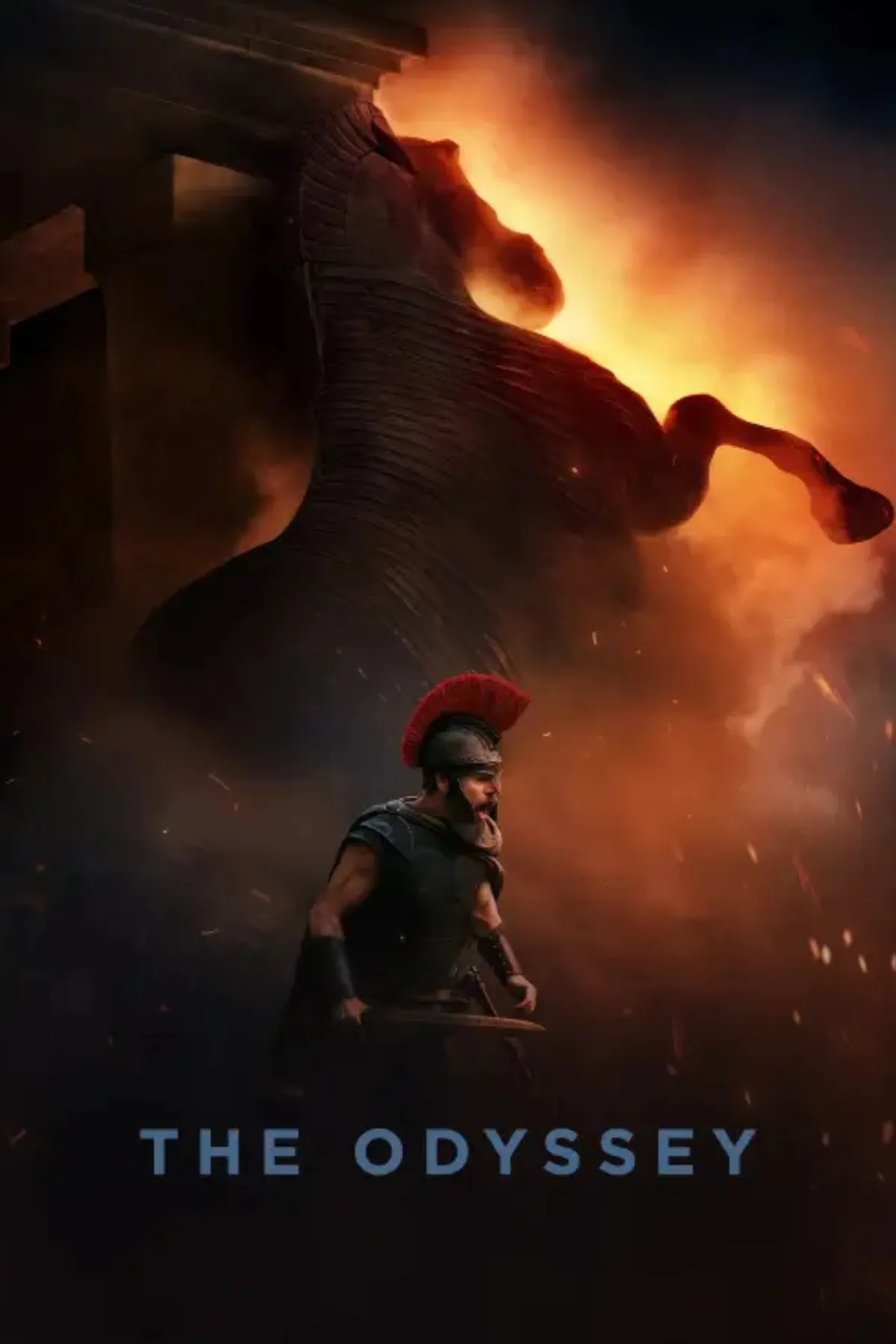
The Odyssey (2026)
- Cast: Matt Damon, Tom Holland, Anne Hathaway, Robert Pattinson, Lupita Nyong’o, Charlize Theron, Zendaya, Benny Safdie, Jon Bernthal, John Leguizamo, Himesh Patel, Mia Goth, Will Yun Lee, Jimmy Gonzáles, Elliot Page, Bill Irwin, Samantha Morton, Corey Hawkins
- Director: Christopher Nolan
- Genre: Action, Adventure
- Runtime: 173 minutes
- Rated: R
- Release Date: July 17, 2026
- Movies Like The Odyssey: The Northman, The Green Knight, Napoleon
- Follow us on Letterboxd