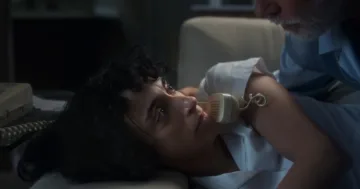
There is no getting around the fact that A Better Tomorrow II undeniably operates within the classic sequel tropes, in both the best and messiest ways. John Woo is back in the director’s chair, Tsui Hark is back producing (and co-writing), and the film openly reshapes itself around what audiences responded to most in A Better Tomorrow: the cool, mythic swagger of Chow Yun-fat. That decision is understandable, and even kind of inevitable. It also warps the movie’s center of gravity into something lopsided, where the narrative mechanics feel like they are constantly rearranging furniture just to keep the party going.
On paper, it is a continuation of the Sung brothers’ story. Ti Lung returns as Sung Tse-ho, now offered early parole if he helps the police take down his old boss and mentor Lung Sei (Dean Shek), who is suspected of heading a counterfeiting operation. Leslie Cheung returns as Sung Tse-kit, now working undercover on the same case while trying to build a stable life with his pregnant wife Jackie (Emily Chu). This setup offers a lot of ground to traverse – loyalty versus survival, brotherhood versus “doing the right thing,” and the quiet dread of realizing your past is never going to let you go.
Then the movie starts doing what it really wants to do, which is expand, detour, and reload. After being framed, Lung flees to New York City with Ho’s help, only for tragedy to crack him open and send him into a psychological tailspin. The story pivots again when Ho learns that Mark Lee has a long-lost twin brother, Ken Lee (Chow Yun-fat), a former gang member who has drifted across America and ended up running a restaurant in New York. It is a classic Hong Kong sequel move: if the icon died, introduce a cousin, a twin, a brother, anything to get the icon’s energy back on screen. In this case, it works, even if it is also the moment the film becomes unapologetically unwieldy.
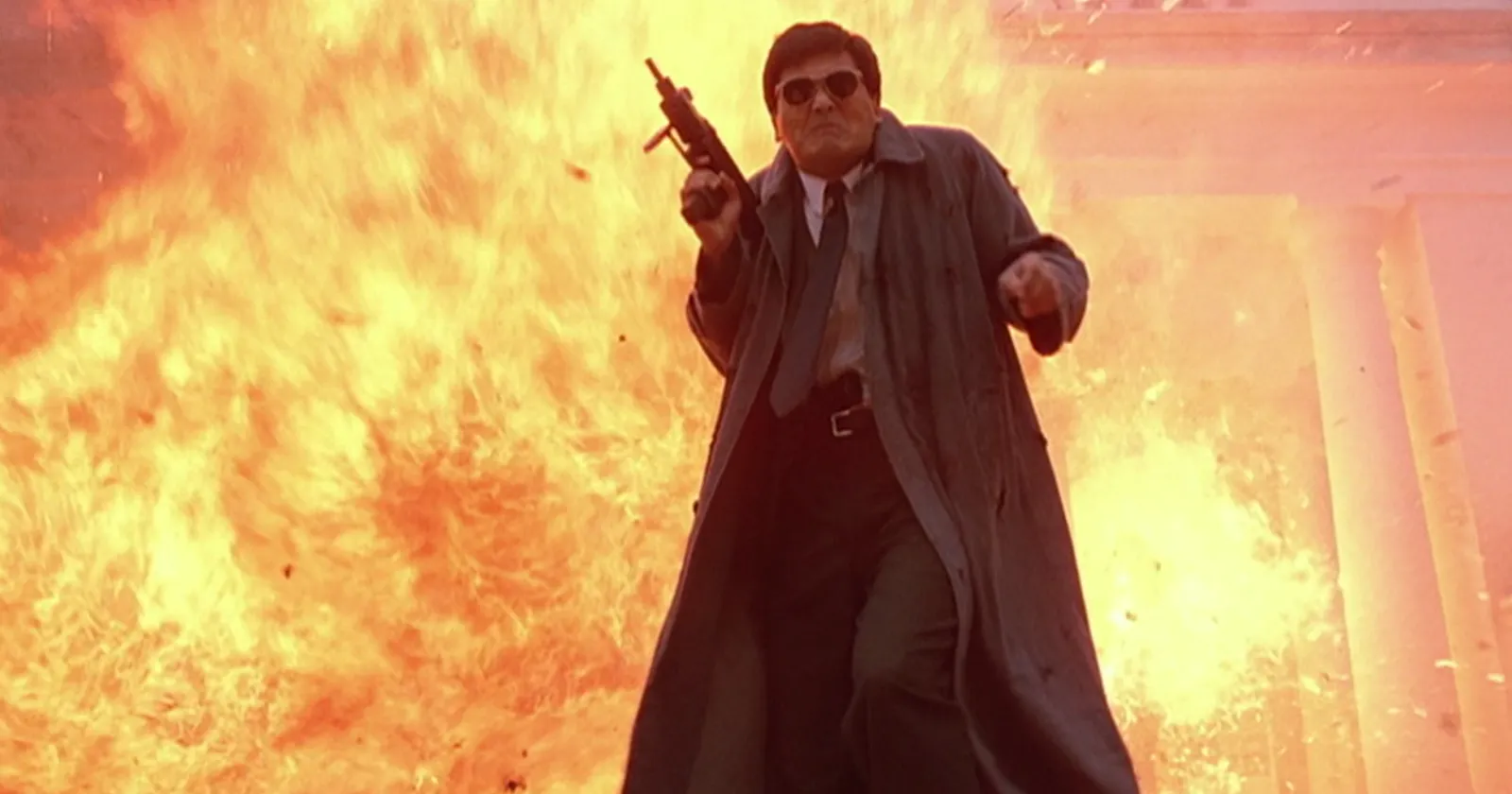
Ken is the movie’s shot of adrenaline. Woo knows exactly how to frame Chow Yun-fat’s presence as a kind of cinematic cheat code the same way he did in the original. Ken walks into the film with inherited mythology, even if you can feel the screenplay straining to justify why he is here and why he matters to the Sung brothers’ fight. But once Ken is in the mix, A Better Tomorrow II starts to feel like Woo and Hark chasing something bigger than the first film. There are more bodies, more blood, more operatic martyrdom, more gunplay staged like dance choreography. The violence is exaggerated to the point of near parody, and yet it is hard to deny the craft and conviction behind it.
That is the push and pull that defines the entire experience. As a story, it can be genuinely difficult to track, especially if you are hoping for clean motivations and elegant cause-and-effect. The film is constantly shifting its “main” thread, bouncing between police pressure, triad politics, a New York detour with American mobsters circling, and the emotional wreckage left behind in Hong Kong. The sensation is not “tight thriller” so much as “volatile collage,” like Woo is willing to sacrifice clarity if it means he can keep escalating the operatic tone.
And still, the highs are real. There is a reason Woo becomes Woo. Even before The Killer and Hard Boiled fully codify his modern action language, you can see the obsession with camaraderie, honor, sacrifice, and betrayal turning into movement. Woo’s best action sequences are not just loud, they are emotional. Characters do not simply shoot, they commit to a choice with their entire body. When Ken arms himself in an apartment building and the walls start closing in, the movie briefly becomes a siege picture, and Woo’s command of space and rhythm locks in.
That third act is the clearest argument for why A Better Tomorrow II still matters. It is ecstatic Woo maximalism with extended gunfights, bodies dropping, righteous fury as a form of catharsis, and a “burn it all down” moral logic that feels both noble and deeply self-destructive. The emotional spine becomes simple and blunt, but it works. The movie does not need to convince you that these men are good people. It needs to convince you they believe in something, even if that belief is doomed.
It is also impossible to ignore the behind-the-scenes friction baked into the final cut. The Woo and Tsui Hark tension is part of the film’s lore, and it shows in the way the movie sometimes feels like it is fighting itself over what it wants to be: a Ho-and-Kit continuation, a Dean Shek showcase, a Chow Yun-fat victory lap, or a pure action escalation machine. Even Woo has been on record as feeling the final version is uneven, despite being proud of the climactic gunfight. Watching it now, “uneven” is the right word.
READ MORE MOVIE REVIEWS: Raising Arizona, Blue Velvet, Star Trek IV: The Voyage Home
That unevenness is why I end up landing in the middle on A Better Tomorrow II. As a piece of John Woo and/or Tsui Hark history, it is essential. It bridges the gap between the breakout phenomenon of A Better Tomorrow and the colder, cleaner mastery that would come from Woo with The Killer and Hard Boiled. As a movie to throw on when you want its director at his most focused, it’s not the first one I would recommend. But as a messy, fascinating artifact of a director and producer trying to steer the same ship in different directions, it is hard to look away from.
Score: 6/10
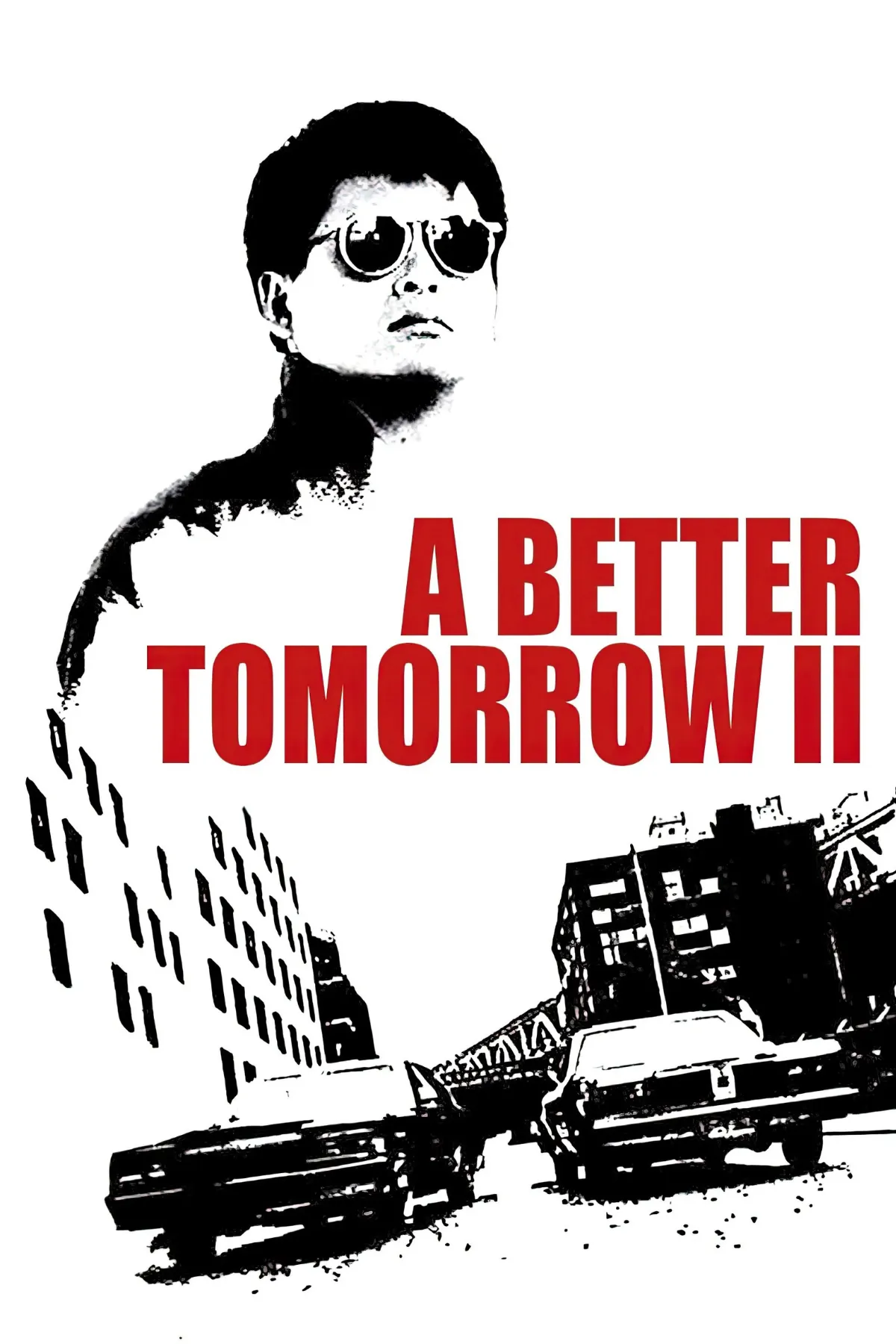
A Better Tomorrow II (1987)
- Cast: Ti Lung, Chow Yun-Fat, Leslie Cheung, Emily Chu Bo-Yee, Dean Shek
- Director: John Woo
- Genre: Action, Crime, Drama
- Runtime: 103 minutes
- Rated: NR
- Release Date: Decemebr 17, 1987
- Movies Like A Better Tomorrow II: John Wick: Chapter 4, Last Hurrah for Chivalry, Sisu
- Follow us on Letterboxd